
Learning how to season a cast iron pan is simpler than the internet makes it sound: clean the pan, wipe on a whisper-thin layer of the right oil, bake it in the oven upside down for an hour, and repeat a few times. That polymerized oil layer is what turns bare grey iron into a dark, slick, rust-proof cooking surface. Below is the exact method, the oil choice that actually matters (including the truth about the famous flaxseed hack), and how to fix sticky, flaky, or botched seasoning.
What seasoning actually is
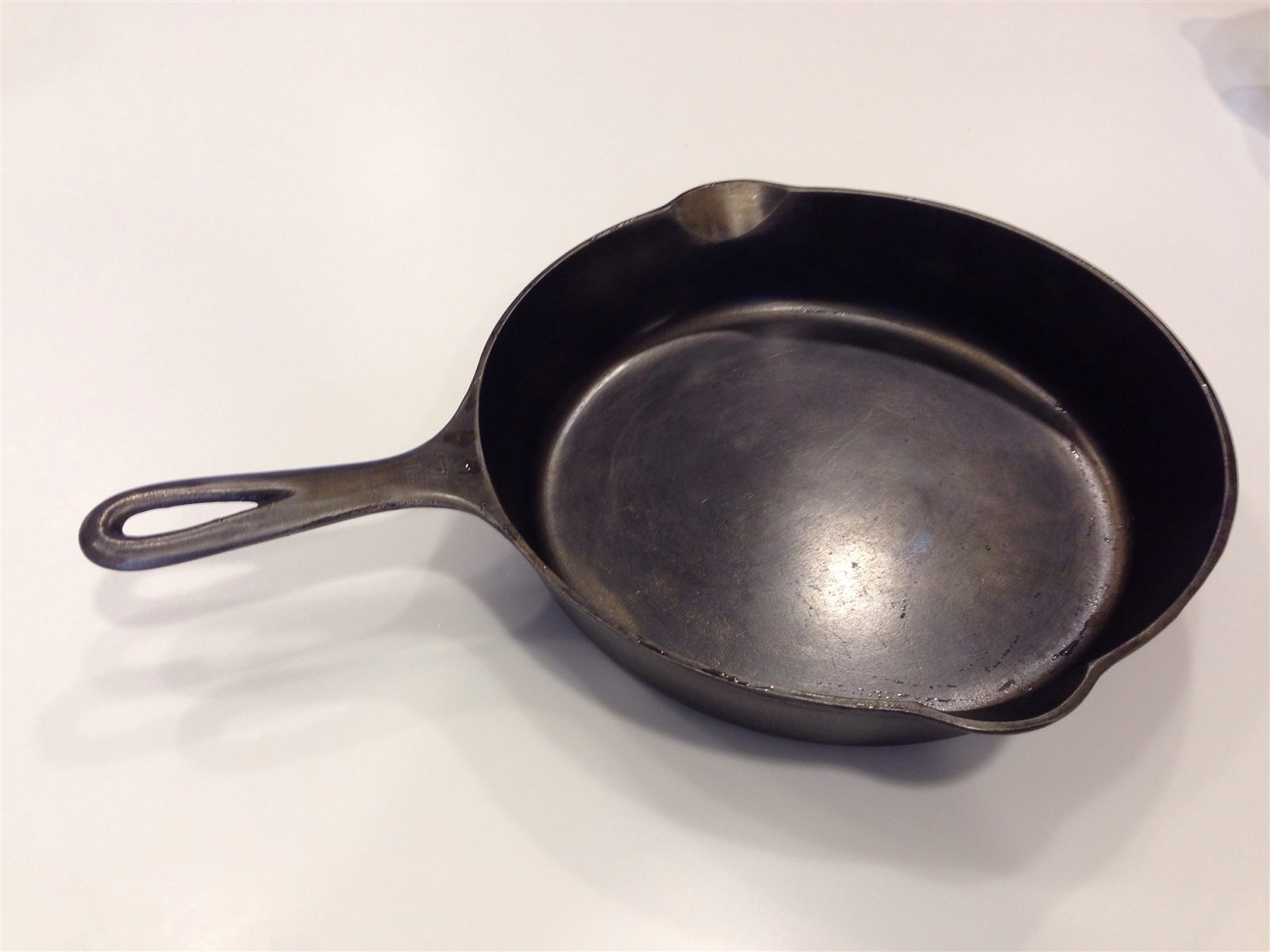
Seasoning is not grease sitting on the metal. It is polymerized oil: when oil is heated past a threshold in the presence of iron, its molecules cross-link into a hard plastic-like coating bonded to the pan. That is why a freshly seasoned pan feels slick like a coating, not oily like a wipe – and why the process involves an hour in the oven, not a quick towel job. Every time you cook with fat and the pan handles it well, the layer thickens a hair. Vintage Griswold and Lodge pans with decades of dark patina are just this process repeated thousands of times.
How to season a cast iron pan: the oven method
- Step 1 – Wash and dry completely. New pans ship with a protective wax coating; scrub it off with hot water, dish soap (yes, soap is fine), and a brush. Dry the pan thoroughly, then put it in the oven for five minutes so every trace of water evaporates from the pores.
- Step 2 – Oil it thin, then wipe it off. Rub a small amount of oil over every surface, inside and out, handle included. Then take a clean, dry cloth or paper towel and wipe it as if you made a mistake – the layer that remains should look almost dry. This is the single most important step: excess oil is what causes sticky, uneven seasoning.
- Step 3 – Bake upside down at high heat. Set the oven to 450 to 500 F, place the pan upside down on the rack (foil or a baking sheet below catches drips), and bake for one hour. Upside down keeps pooling oil from collecting in the cooking surface.
- Step 4 – Cool and repeat. Let the pan cool in the oven or on a rack until handleable. Repeat the oil-and-bake cycle three to four times for a new pan. Each cycle darkens the surface; after four, you have a working base layer.
That is the whole recipe. Serious Eats and Lodge’s own test kitchen describe the same sequence; the differences between guides are mostly temperature details and oil debates.
The oil question: what to season with
Oil choice matters less than the thinness of the application, but it is not zero. The test-kitchen default is the boring one: vegetable or canola oil, both cheap, widely stocked, and high enough in smoke point to polymerize cleanly – Lodge’s own kitchen reaches for them regularly. Grapeseed and sunflower oil work on the same principle.
The famous internet alternative is flaxseed oil, and it deserves an honest verdict. Flaxseed (linseed) oil polymerizes harder than any food oil – it is the same family of oils used as wood finishes – and initial results look glossy and beautiful. The catch, reported widely by the cast iron community and visible in long-term tests, is that flaxseed seasoning tends to be brittle: it can flake off in sheets after months of use, it costs several times what canola does, and its low smoke point makes it smoke noticeably during seasoning. It is not wrong – plenty of cooks love their flaxseed pans – but for a first-time seasoning, canola is the safer, cheaper, more forgiving choice. Save the artisan oils for a later experiment, not the foundation layer.
Two more choices are fine despite the myths: a thin coat of Crisco (vegetable shortening) is the old-school standard and works, and bacon grease is fine for touch-up cooking but its salt content makes it a poor base-layer oil.
The stovetop maintenance round
Between oven seasons, the pan maintains itself through use – but there is a quick version worth knowing. After washing and drying a pan, set it on the stove over medium heat for a few minutes until it just starts to smoke faintly, rub in a drop of oil with a paper towel, and wipe it back off while hot. The flash of heat dries the metal and refreshes the surface in two minutes. This is the round that keeps a weekly-use pan improving without ever scheduling an oven session.
Fixing the three common failures
- Sticky or tacky surface: too much oil was left on before baking. The fix is more heat, not scrubbing – return the pan to a 450 F oven for another hour; the excess polymerizes or burns off. If it remains tacky, strip and restart with a thinner coat.
- Flaking or patchy spots: the layer is too thick or built on a dirty base. Scrub the loose spots back to bare iron with steel wool, wash, and run two or three fresh thin-coat cycles. The repair blends in within a few cooking sessions.
- Rust: surface rust from storage or a forgotten wash is not a death sentence. Scrub it out with steel wool and oil, wash, dry, and re-season the whole pan. Deep rust with pitting needs a full strip (oven cleaner or electrolysis territory) – but that is rare on home pans.
What never to do
- Do not soak a cast iron pan or put it in the dishwasher – standing water is how rust starts
- Do not season on top of old flaky seasoning; strip the loose stuff first
- Do not fear soap – modern dish soap will not strip polymerized seasoning, only the grease on top of it
- Do not store pans with the lid on tightly; trapped moisture dulls the surface
How long until the pan is good
A four-cycle fresh seasoning cooks eggs acceptably and sautes without complaint, but the real nonstick develops over the first months of cooking. The fastest path there is simply fat-based cooking: fry potatoes, sear meat, bake cornbread, and skip long simmered-acid dishes (tomato sauce, wine reductions) for the first few weeks – acid eats at a young seasoning layer. Once the pan is dark and glossy, even those dishes are fine.
The pan also earns its place in an organized kitchen: it lives on the stovetop, not in a cabinet, and our five-zone pantry method reserves exactly that kind of counter real estate for daily-driver tools. And once the seasoning is mature, the pan pays for itself in the oven too – a cast iron skillet is the classic vessel for skillet cookies and deep-dish bakes, so put it to work on a tray of six-base-dough cookies and let cooking do the rest of the seasoning for you.
Leave a Reply