
Maple syrup grades are not quality tiers – they are flavor and color classes, and knowing the difference is the difference between syrup that disappears politely into your recipe and syrup that takes over the whole bake. Since 2015, every bottle sold in the US and Canada carries the same system: all real maple syrup is Grade A, sorted into four classes by color – Golden, Amber, Dark, and Very Dark – with the flavor word printed right next to the color. This guide decodes what each class actually tastes like, the exact color line that separates them, which grade belongs in your coffee versus your batter, and the label tricks that reveal fake syrup.
The Four Maple Syrup Grades, Decoded
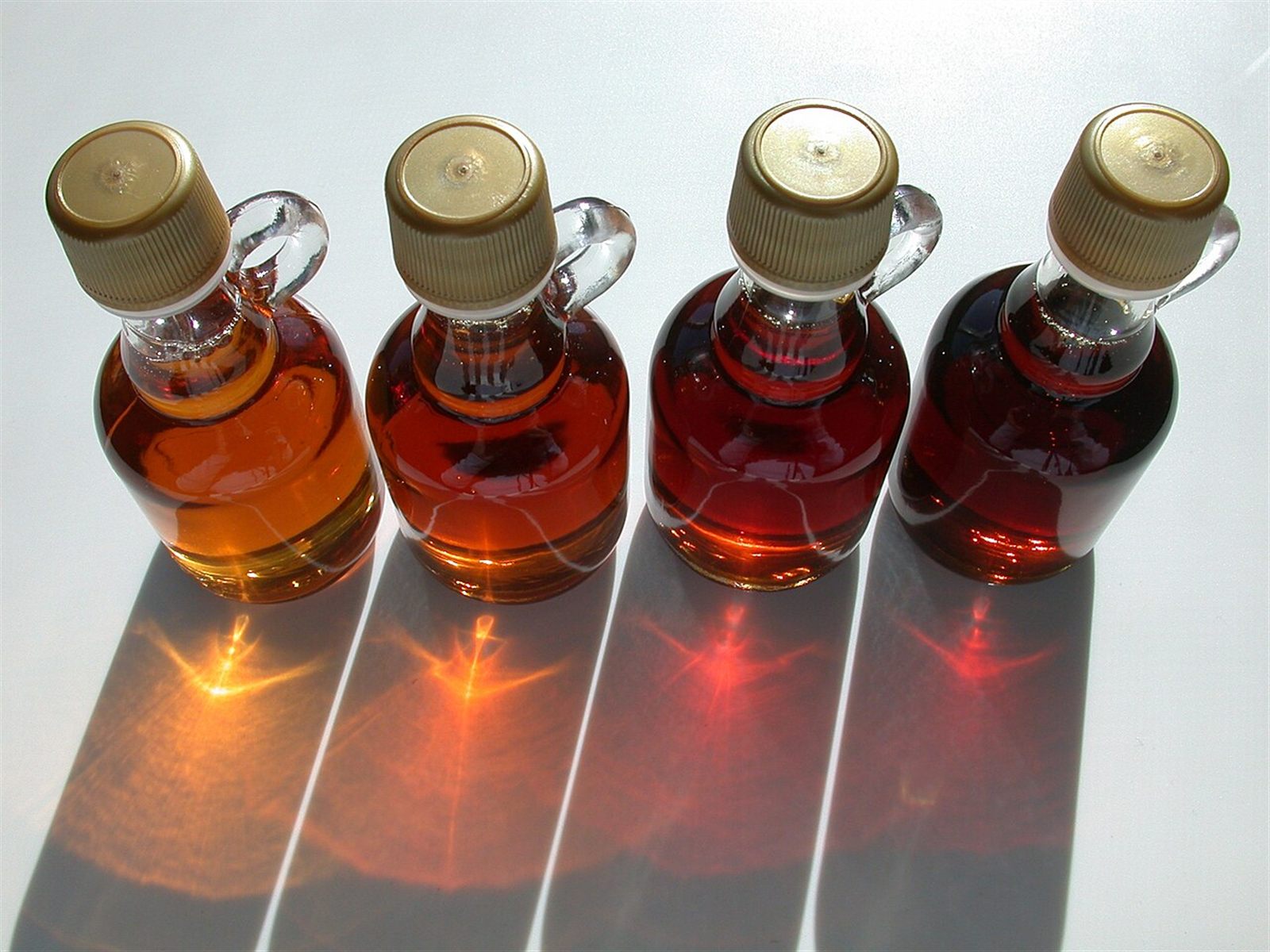
Every class below is officially “Grade A” – the color word and taste word are the real label:
- Golden – Delicate Taste: the palest class, glass-clear straw to light gold. Flavor is gentle and subtle – light vanilla, faint woody notes, barely any maple punch. This is the first-run syrup of the early season and the class to use where maple should whisper: cream, whipped toppings, glazes, and any bake where you do not want it heard.
- Amber – Rich Taste: the all-rounder and the best seller. Mid-amber color, fuller body, genuine caramel character. Pancake-table default, and the safest substitution grade in recipes – present but not bossy.
- Dark – Robust Taste: deep amber-brown, pronounced maple flavor with toasted sugar notes. Bakers’ grade: in batter and dough, its flavor survives the oven, where Golden would vanish entirely.
- Very Dark – Strong Taste: nearly opaque, molasses-adjacent intensity. Formerly sold as “Grade B.” Best where it can lead: granola, baked beans, barbecue glazes, gingerbread, maple candy.
Where the Color Lines Actually Are
The classes are not opinions – they are measured. Graders pass light through a 10 mm sample and read how much gets through at 560 nm wavelength:
- Golden: 75 percent or more light transmission
- Amber: 50.0 to 74.9 percent
- Dark: 25.0 to 49.9 percent
- Very Dark: under 25 percent
Two production facts explain the whole system. First, timing drives color: sap run early in the season yields light syrup; as the season warms toward its end, the sap shifts and the syrup darkens and flavors up – so a farm’s own bottles change class week to week. Second, the chemistry is fixed: real maple syrup – Canadian or US Grade A – must come exclusively from maple sap and concentrate to at least 66 percent sugar. Anything that fails the flavor or clarity bar for Grade A gets downgraded to “processing grade,” which cannot legally be sold in small retail bottles.
Scale matters for one more reason: almost all the world’s maple syrup comes from a small corner of northeastern North America. Canada produces over three quarters of global supply, and Quebec alone accounts for roughly 90 percent of Canadian output – which is why most Grade A bottles on US shelves are Quebec syrup, and why one poor spring there nudges prices in every supermarket on the continent. The classes stay constant; the crop and its price do not.
Which Grade for Which Job
Match intensity to the bake:
- Table syrup over pancakes and waffles: Amber – rich enough to matter, gentle enough for repeat bites. Golden if the household prefers subtle.
- Baking: Dark, moving to Very Dark for spice-heavy recipes. Cookie dough and quick breads mute flavor dramatically, which is why the sugar substitute ratios in our baking guide assume Dark or Amber syrup – a Golden swap will taste like sweetened nothing after 20 minutes in the oven.
- Coffee and lattes: Golden or Amber. The home coffee bar crowd leans Amber; Dark overwhelms a flat white but earns its place in an iced maple oat latte.
- Granola, glazes, candy: Very Dark. Heat intensifies what is already there, and robust syrup survives boiling into taffy and sugar work – our candy thermometer stages guide maps exactly where each sugar texture lands.
- Finishing – yogurt, cream, fruit: Golden. Its delicacy is the point; it seasons rather than dominates.
Reading the Label Like a Pro
Three quick checks before you buy:
- “Grade A” alone means nothing – every real maple bottle says it. The class (Golden/Amber/Dark/Very Dark) and taste word are what you are choosing.
- Ingredients should read exactly one word: maple syrup, or “pure maple syrup.” “Pancake syrup,” “waffle syrup,” and “breakfast syrup” are flavored corn syrup that legally cannot call themselves maple – usually a third of the price, and for good reason.
- Old books and old family labels use the retired system: “Fancy” was the old Grade A Light Amber (today’s Golden), and “Grade B” was the intense dark bottle – today’s Very Dark. Same syrup, different paperwork; the flavor did not change in 2015, only the labels.
Storage and the Small-Bottle Rule
Unopened, maple syrup keeps essentially indefinitely – its 66 percent sugar concentration is self-preserving. Once opened, refrigerate it; real syrup can grow surface mold at room temperature, and the quality advice is to discard rather than skim. Buy the size you will finish in a month or two: the four-class system means there is no reason to buy one “best” jug – an Amber for the table and a Dark for the pantry costs about the same as one giant jug and serves both jobs better. Airtight discipline applies here exactly as it does everywhere else in the kitchen organization system – syrup left dripping on the shelf attracts everything you do not want in a pantry.
And when December baking kicks in, the dark grades earn their shelf space: the robust classes stand up to molasses and spice in the base doughs of our christmas cookie recipes, where a Golden syrup would simply vanish.
The whole system in one line: color is intensity, not quality – Golden whispers, Amber balances, Dark bakes, Very Dark leads. Pick the class for the job, read the ingredient line to dodge the fakes, and every bottle you buy will taste the way the label promised.
Leave a Reply