
Sugar substitutes are the three jars most home bakers reach for when they want out of the white-sugar bag: honey, maple syrup, and coconut sugar. Each one bakes differently, and each one has a catch – the two syrups bring extra liquid, acid, and faster browning into the recipe, while coconut sugar swaps clean but carries a caramel edge that not every bake wants. Here is the working baker’s version of how all three behave: exact ratios, the two chemistry adjustments nobody warns you about, which bakes each sweetener wins, and the honest word on the health claims.
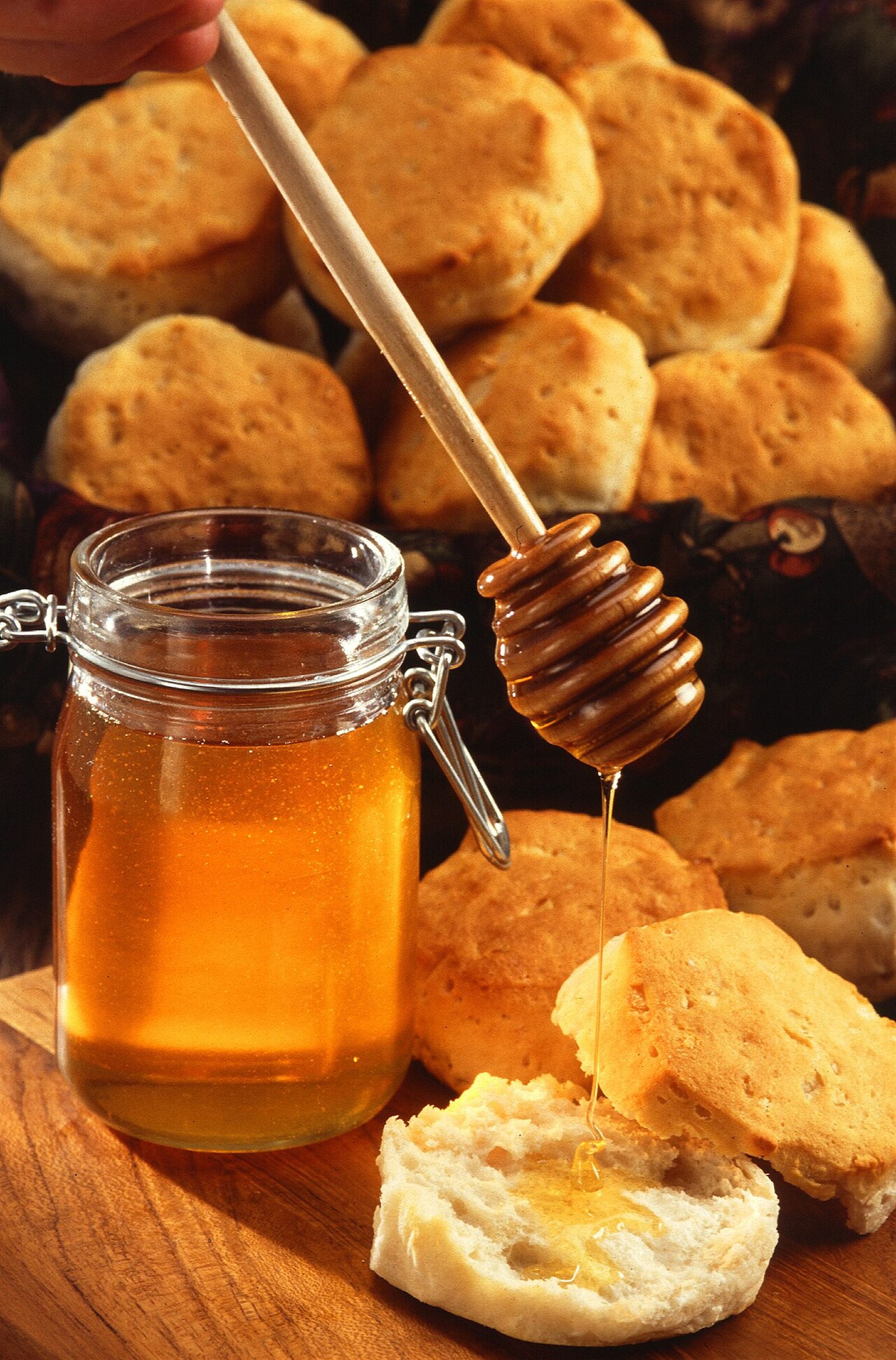
Substituting Honey for Sugar: The Rich, Moist Swap
Honey is the sweetest of the three – roughly 25 to 50 percent sweeter by volume than table sugar, which is why the standard ratio is 3/4 cup of honey for every 1 cup of sugar (if you want the sweetness fully equal, drop to 2/3 cup). Because honey is already liquid, you must remove liquid from the recipe to pay for it:
- Reduce other liquids by 2 to 4 tablespoons per cup of honey (about 1/4 cup total in a typical cake or muffin recipe).
- Add 1/4 to 1/2 teaspoon of baking soda per cup of honey. Honey is slightly acidic; the soda neutralizes it, and the lift you get from the reaction keeps crumb from collapsing dense.
- Lower the oven temperature by 25°F. Honey browns faster than sugar – glucose and fructose caramelize early – and a standard-temp bake turns honey cakes mahogany before they are cooked through.
The payoff: bakes stay moister for days, and the flavor follows the honey. A mild clover disappears politely into a muffin; a buckwheat or wildflower honey will announce itself, which is a feature in rustic breads and a problem in delicate sugar cookies. Honey’s real home territory is quick breads, muffins, granola, and chewy drop cookies – including the base doughs in our christmas cookie recipes, where swapping into the molasses-style dough is the most forgiving starting point.
Substituting Maple Syrup: The Subtle One
Maple syrup follows almost the same playbook as honey, with gentler flavor stakes:
- 3/4 cup maple syrup per 1 cup sugar, from Vermont maple producers down to everyday brands.
- Reduce other liquids by 2 to 4 tablespoons, same as honey.
- Add 1/4 to 1/2 teaspoon baking soda per cup – maple is mildly acidic too.
- Drop the oven 25°F; maple also browns early.
Maple’s character is quieter than honey’s: in most bakes it reads as “brown sugar, but rounder” rather than tasting like pancake syrup. It shines where its own sweetness gets a stage – granola, pie fillings, glazed breads, and anything with nuts – and fades politely into spiced batters where honey would dominate. Use real maple syrup, not pancake syrup, which is mostly corn syrup and flavors nothing.
Coconut Sugar: The 1:1 That Behaves Like Brown Sugar
Coconut sugar is the only one of the three that swaps straight across: 1 cup for 1 cup, no liquid adjustment, no temperature change, no soda. It is a dry granule that looks, measures, and creams like brown sugar, with sucrose content around 70 to 80 percent against white sugar’s 99.9 percent – which is exactly why the texture of bakes stays so close to the original recipe.
- Flavor: mild caramel with a faint earthy-coconut note – closest to light brown sugar of any alternative.
- Best in: cookies first. The deeper flavor and slightly lower sucrose produce a genuinely chewy, caramel-edged chocolate chip cookie, and the swap is invisible in gingerbread and spice bakes. Creaming it behaves exactly like brown sugar, so the same gear that handles butter-and-sugar work – sized honestly in our stand mixer comparison – handles coconut sugar without change.
- Watch out: it is darker than white sugar, so pale bakes – vanilla cakes, shortbread, meringues – come out beige. In meringues and candy work, do not swap at all; structure depends on pure sucrose.
- Cost: coconut sugar typically runs 2 to 3 times the price of white sugar per pound, and honey and maple cost several times that per cup. The “free” swap is never free.
The Conversion Chart to Tape Inside a Cabinet
The whole system in one glance (per 1 cup of granulated sugar replaced):
- Honey: 3/4 cup honey – 2 to 4 tbsp liquid out – +1/4 to 1/2 tsp baking soda – oven down 25°F
- Maple syrup: 3/4 cup syrup – 2 to 4 tbsp liquid out – +1/4 to 1/2 tsp baking soda – oven down 25°F
- Coconut sugar: 1 cup, change nothing, accept a beige tint and caramel flavor
Two universal rules cover the rest. First, taste the batter: honey and maple are sweeter per cup than sugar, so if a recipe already runs sweet, pull back toward 2/3 cup. Second, never substitute in recipes where sugar’s structure is the point – meringues, marshmallows, lace cookies, caramel work – because those bakes are chemistry demonstrations, and the chemistry runs on sucrose.
The Honest Word on Health Claims
You will see glycemic-index tables “proving” honey or coconut sugar is metabolically different from sugar. The truth is less exciting: coconut sugar does measure a somewhat lower GI than white sugar in testing, honey and maple bring trace minerals, and all of that is real – but every one of these is still a concentrated simple sweetener, used by the quarter cup, and the calorie counts per tablespoon are nearly identical. Bake with them for flavor, moisture, and character; that is what they are genuinely better at. If a bake needs to work for someone managing blood sugar, portion size and recipe choice do the work, not the sweetener label.
One last practical point: liquid sweeteners are pantry goods with real keeping rules, and sticky jars deserve their own system – the airtight-jar discipline in our kitchen organization guide keeps honey and maple where they belong and off the shelf boards. And if the sweetener drawer doubles as the coffee corner, a jar of honey earns its spot twice: honey in tea and lattes is the quiet bestseller of the home coffee bar.
Choose by what the bake needs, not by what the label promises: honey for moisture and chew, maple for round quiet sweetness, coconut sugar for an invisible swap with a caramel accent. Master those three ratios – 3/4, 3/4, 1:1 – plus soda, liquid, and 25 degrees, and the white-sugar bag stops being a dependency.
Leave a Reply