
Cake pan sizes are the most common reason a trusted recipe fails for no apparent reason. A recipe written for an 8-inch round poured into a 9-inch round does not make the same cake: the 9-inch pan has roughly 27 percent more surface area, so the layers come out thin, the edges set sooner than the center, and the original bake time becomes a trap. The fix is not guesswork. Pans are matched by area and volume, and once you know a handful of numbers — plus the two-thirds fill rule — you can swap almost any standard pan with confidence. Here is the chart, the multiplier method, and the bake-time adjustments that matter.
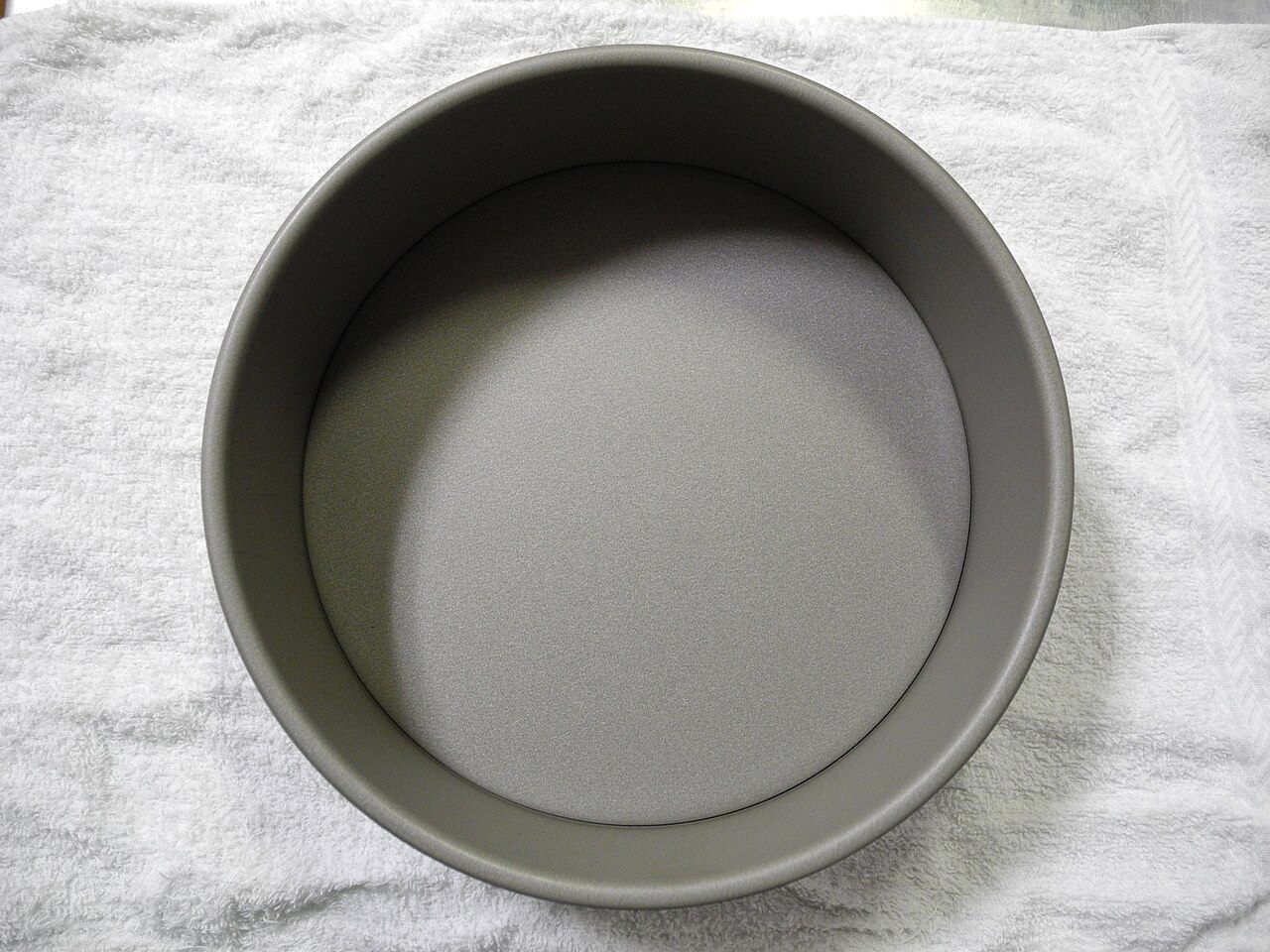
Cake Pan Sizes: The Area and Volume Chart
These figures assume straight sides and the modern 2-inch depth. Real pans with sloped sides hold a little less, but the ratios between them — which is what you swap on — stay the same.
- 6-inch round: 28 square inches, 4 cups to the brim, 2½ to 3 cups of batter.
- 8-inch round: 50 square inches, 6 to 7 cups to the brim, 4 cups of batter.
- 9-inch round: 64 square inches, 8 to 8.8 cups, 5 to 6 cups of batter.
- 10-inch round: 79 square inches, 11 cups, about 7 cups of batter.
- 8-inch square: 64 square inches, 8 to 8.9 cups, about 5¼ cups of batter.
- 9-inch square: 81 square inches, 10 to 11 cups, about 6½ cups of batter.
- 11-by-7 rectangle: 77 square inches, about 10 cups.
- 9-by-13 rectangle: 117 square inches, 14 to 16 cups, about 10 to 11 cups of batter.
Two facts unlock almost every substitution. First, a 9-inch round and an 8-inch square have the same 64 square inches of bottom area — you can swap them with no recipe change. Second, a 9-inch round is 27 percent bigger than an 8-inch round even though it is only an inch wider; putting an 8-inch recipe in a 9-inch pan without scaling gives you a thin cake that bakes too fast at the edges. For sour cream or pound cakes, fill the pan only half to two-thirds full so there is room to rise. Cheesecakes and dense batters can go to three-quarters; muffins take about a third of a cup per well, and a Bundt should sit 1¼ inches below the rim.
How to Convert Any Pan Size
Use the area, not the diameter. Divide the area of the pan you are using by the area of the pan the recipe was written for, and multiply every ingredient by the result. A 9-inch square recipe going into a 9-by-13 pan is 117 ÷ 81 = 1.44, so make about one and a half batches. A 9-inch round into a 9-by-13 is 117 ÷ 64 = 1.83 — close to doubling. Going the other way, an 8-inch round instead of a 9-inch round is 50 ÷ 64 = 0.78, so use about three-quarters of the recipe.
America’s Test Kitchen publishes the same conversion table in multiplier form: from a 9-inch round, use 0.5 for a 6-inch round, 0.8 for an 8-inch round, 1.0 for an 8-inch square, 1.3 for a 9-inch square, and 1.8 for a 13-by-9. If you would rather not do the math, weigh the ingredients — a kitchen scale makes scaling by 1.44 far less error-prone than converting cups of flour, and our how to measure flour guide covers why weight wins here.
Conversions That Work Without Changing Anything
- One 9-inch round = one 8-inch square (same 64 square inches).
- One 9-inch square = one 11-by-7 rectangle (about 80 square inches).
- One 9-inch round = one 9-by-5 loaf pan (roughly 8 cups).
- One 9-by-13 = two 9-inch rounds, or three 8-inch rounds.
- Two 8-inch rounds = one 9-by-13, with about 16 percent more batter for the same depth.
- Six cups of batter = 12 to 16 cupcakes, baked 18 to 22 minutes instead of 30 to 40.
Cupcakes are the underrated escape hatch: almost any cake batter bakes well in a muffin tin, which is handy when you need to use up extra batter rather than overfill a smaller pan. The exceptions are structural — jelly-roll and sponge cakes need their exact pan because they are rolled, and angel food or chiffon cakes need an ungreased tube pan to climb the sides. Those do not swap.
Metric Conversions and Inch-to-Cm Pan Sizes
US recipes use inches; European tins use centimeters. An 8-inch round is a 20 cm tin, a 9-inch is 23 cm, and a 10-inch is 25 cm. A 24 cm tin is 9.4 inches — neither 9 nor 10 — and a 28 cm tin is about 11 inches. A 9-by-13 rectangle is 23-by-33 cm; the European “30-by-20” tray is closer to 12-by-8 and roughly 10 percent smaller. Half-sheet pans run about 33-by-46 cm, while the common European “40-by-30” oven tray is about 20 percent smaller. If the numbers are confusing, fill the pan with water one cup at a time and count, then write the capacity on a strip of tape under the pan — the same practical habit behind our parchment vs silicone lining guide.
How Pan Size Changes Bake Time
Batter depth sets the clock. In a wider, shallower pan the center sets sooner: keep the temperature the same and start checking 20 to 30 percent early, or about two-thirds of the original time. In a deeper pan, drop the oven by 25°F and add time so the outside does not overbake before the middle sets. A fan oven runs about 20°C cooler than the recipe’s conventional temperature regardless of pan. Glass runs hotter at the edges (drop 25°F), and dark nonstick needs an early check. In every case, trust a toothpick over the timer — and if the recipe begins with creamed butter and sugar, proper butter temperature and aeration matter as much as the pan you chose. For a from-scratch layer cake, our baking powder vs baking soda guide explains the lift that fills those layers.
The Bottom Line
Match pans by area, not by the number stamped on the bottom. Keep the two-thirds fill rule, remember that 9-inch round equals 8-inch square, and scale by dividing the target area by the original. Change the time whenever the batter depth changes — shallower bakes faster, deeper bakes slower and cooler. Get that right and the recipe you trusted starts behaving the way it did for the person who wrote it.
Leave a Reply