

Baking powder vs baking soda is the comparison every baker gets wrong at least once, because both are white powders that make batters rise – yet they are not interchangeable, and swapping them carelessly is what produces flat cookies, soapy-tasting cakes, and recipes that simply do not lift. The short version: baking soda is a single base that needs acid to work, while baking powder is a complete leavening system with the acid already built in. Which one your recipe uses depends on the other ingredients in the bowl – and knowing why makes every substitution decision obvious instead of a guess. Here is how each one works, when to use which, and how to substitute without ruining the bake.
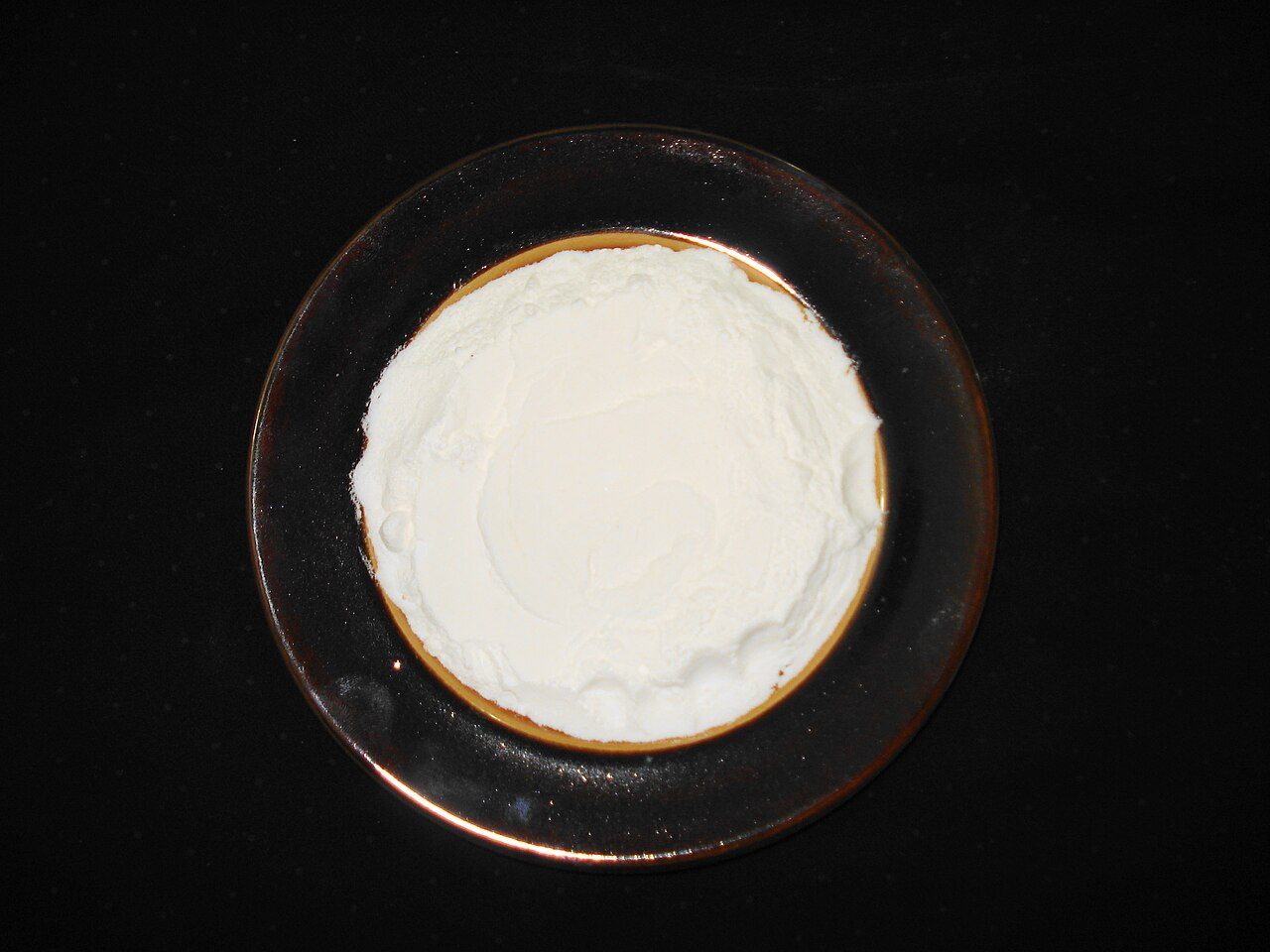
Baking Powder vs Baking Soda: The Chemistry at a Glance
Baking soda is pure sodium bicarbonate – a base. It produces carbon dioxide only when it meets an acid and a liquid at the same time, and it reacts the moment it does. That is why soda recipes call for ingredients like buttermilk, yogurt, brown sugar, molasses, honey, lemon juice, or natural cocoa: each of those is acidic, and the soda is there partly for lift and partly to neutralize that acid. Miss the acid and the soda does nothing for the rise – and the leftover base leaves a metallic, soapy taste behind.
Baking powder is soda plus its acid partner, both pre-measured and dried: sodium bicarbonate, a dry acid salt, and a little cornstarch to keep moisture from triggering the reaction in the can. Because the acid travels with the base, baking powder works in any batter, even one with no acidic ingredients at all. Most modern baking powder is double-acting: a small rise happens the moment batter gets wet, then a bigger rise kicks in from oven heat, which is why double-acting batters forgive a short delay before baking.
One practical consequence follows from all of this: soda is roughly three to four times stronger by volume, but only when an acid is present. Strength alone is never the question – the question is always what else is in the recipe.
How to Substitute Without Ruining the Bake
Substitutions work in one direction much better than the other:
- Out of baking powder? For each teaspoon needed, use 1/4 teaspoon of baking soda plus 1/2 teaspoon of cream of tartar. If the recipe already contains an acid (buttermilk, brown sugar, molasses, yogurt), you can often use just 1/4 teaspoon of soda per teaspoon of powder and skip the cream of tartar – the recipe supplies the acid itself.
- Out of baking soda? A recipe that depends on soda for its acid-balancing job is the hard case. Swapping in three to four teaspoons of baking powder replaces some lift, but the batter stays more acidic: expect slightly less browning and a tangier crumb. It works in a pinch for cakes and cookies, less well for recipes where soda does heavy browning duty.
- The mistake to avoid: adding extra soda “to make it rise more” in a recipe that already has enough acid neutralized. Extra unreacted soda is exactly what causes that soapy, metallic off-taste – the rise does not scale, the flavor damage does.
Why It Changes Cookies, Browning, and Candy
The powder-versus-soda choice is easiest to see in cookies. The same dough leavened with baking soda spreads more, browns deeper, and bakes chewier – the raised pH accelerates browning reactions. Leavened with baking powder, the same dough puffs up and stays paler and cakier. Neither is wrong; they are different cookies, which is why recipes specify. It is one of the quiet variables behind how our christmas cookie recipes get their textures – brown sugar and its molasses bring the acid, and soda answers it.
Browning is the second job worth knowing. Beyond lift, soda raises pH and speeds browning in anything from cookie crusts to stovetop onions. And in sugar work, soda does something neither powder can: dropped into hot syrup, it releases gas that aerates molten sugar into the foam that becomes peanut brittle – a trick that only makes sense once you know where your syrup sits on the candy thermometer stages, because soda hits the syrup right before it reaches hard crack.
Sweetener swaps shift the acid balance too. Recipes built on sugar substitutes in baking lose the acidity that brown sugar and molasses contribute, which quietly changes how the leavening behaves – one more reason swaps change texture, not just sweetness.
Freshness Tests and Pantry Life
Both powders fail quietly, and both are testable in thirty seconds. Baking soda: spoon a little into vinegar – a vigorous fizz means it is alive. Baking powder: same test with hot water instead, since its acid needs heat and moisture to complete the reaction. No foam, no lift – replace it.
Shelf life differs too. Baking soda, kept dry and sealed, lasts essentially indefinitely (it is a stable mineral salt); its pantry enemy is moisture and absorbed odors, which is why an open box drifts into fridge duty after a few months of baking use. Baking powder is the perishable one: its pre-mixed acid starts losing punch within roughly 6 to 12 months of opening, sooner in a humid kitchen. Both belong in airtight containers away from the stove – the pantry storage for bakers guide covers the container and shelf-life system in full, and the leavener section is exactly where this article’s tests fit in.
A Note on Aluminum and Single-Acting Powder
Older baking powder formulas used aluminum-based acid salts, and a few brands still do – that is the formula behind the classic warning about a metallic taste in baked goods. Most supermarket powders today are aluminum-free and use calcium phosphate acids instead, so check the label once: if the can says aluminum-free, the metallic-flavor risk moves from the ingredient list to your storage habits and expired can, which the freshness test above will catch either way. Single-acting powders (all the lift fires at mixing) still exist too; if yours is one, the batter needs the oven immediately, no dawdling.
The One-Line Rule to Remember
Soda needs an acid you can name in the ingredient list; powder brings its own. If a recipe has buttermilk, brown sugar, molasses, yogurt, or natural cocoa, expect soda – if it does not, expect powder. Learn to read recipes that way and the two cans stop being interchangeable mysteries: each one is doing a specific job, and now you can name it.
Leave a Reply