
How to measure flour correctly decides more bakes than any fancy technique, because flour is the ingredient most easily measured wrong: the same “1 cup” can weigh anywhere from about 120 grams when fluffed and leveled to 160 grams when scooped straight from the bag – a difference of up to 30 percent. No other common ingredient drifts that far, and no recipe survives it gracefully: cookies spread into puddles, cakes turn dry and dense, and bread dough that should be soft and workable comes out tight and crumbly. The fix takes ten seconds per cup. This guide covers the spoon-and-level method, why the bag-scoop fails, and why the kitchen scale quietly ends the argument.
How to Measure Flour: The Spoon-and-Level Method
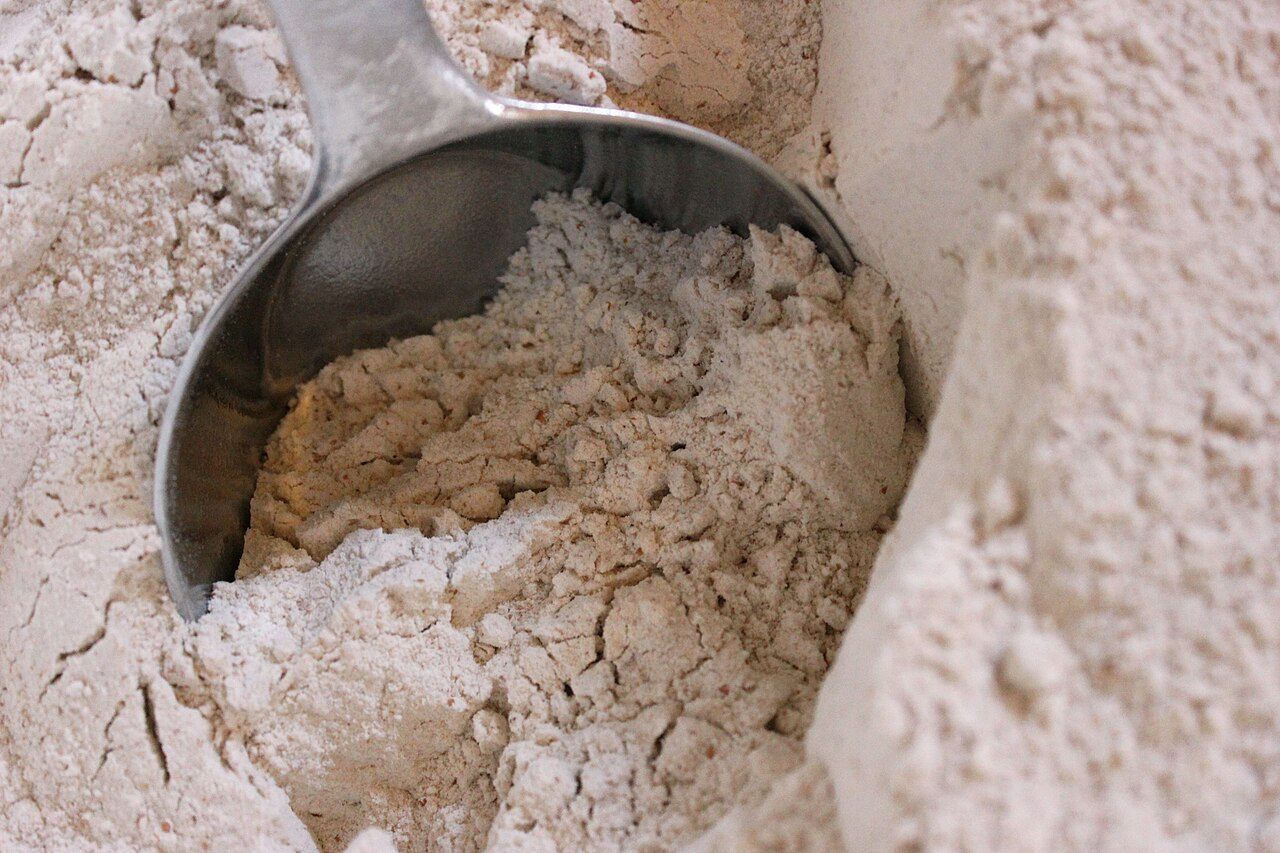
The method bakers’ reference books standardize is called spoon-and-level, and it works because it controls the only real variable in cup measuring: how tightly the flour packs. Flour settles and compresses in the bag – shipping, stacking, and time all press it down. If you drive the cup straight into that compacted flour, you pack it further and drag up a dense, overloaded cup. Spoon-and-level breaks that cycle:
- Fluff the flour first. Stir the bag or bin with a spoon or whisk for a few seconds to re-aerate and undo the settling.
- Spoon into the cup. Scoop with a spoon – not the measuring cup – letting the flour fall lightly until it mounds above the rim.
- Level with a straight edge. Sweep a knife or the flat of a spatula across the rim, letting the excess fall away. No tapping, no shaking, no pressing – every tap settles the flour lower and packs more in.
Done this way, a cup of all-purpose flour lands around 120 to 125 grams, which is what nearly every well-tested recipe assumes. The same cup scooped straight from the bag, tapped, and topped up can reach 140 to 160 grams – so a recipe needing 3 cups silently becomes 360-plus extra grams of flour, which is the entire difference between tender and tough.
Why the Scale Wins Every Time
Every cup-measuring error traces back to one fact: volume measures what a cup holds, and flour’s density varies with how it got there. Weight does not care. A kitchen scale reads grams regardless of packing, humidity, or brand, and it removes the question entirely: 120 grams is 120 grams, every time.
It also scales recipes cleanly – doubling a recipe by weight is simple multiplication, while doubling cups invites rounding errors at every step. And it makes cleanup easier: you can measure everything into one bowl in sequence (tarra, pour, reset). An inexpensive digital scale accurate to 1 gram is the single cheapest upgrade in baking, and once the habit is set, most bakers never measure flour by volume again.
Useful anchors worth taping inside a cabinet: all-purpose flour 120 to 125 g per cup, bread flour about 127 g, whole wheat about 113 g (it is denser but typically fluffed less), powdered sugar around 120 g sifted, and granulated sugar a steady 200 g – sugar does not compress much, which is why cup recipes for sugar drift far less and why flour is the ingredient the scale protects most.
The Mistakes That Hide Inside “One Cup”
- Scooping with the cup itself: the classic error – packs 20 to 30 percent extra flour into every measure.
- Tapping the cup on the counter: each tap jiggles flour into the air pockets; three taps can add the equivalent of a tablespoon or more.
- Sweeping with a rounded edge or your hand: leaves an uneven, overfilled rim. Only a straight edge levels properly.
- Using a liquid measuring cup for flour: the deep, wide-rimmed pitcher makes level-sweeping impossible – dry measures exist for a reason.
- Assuming sifted and unsifted are interchangeable: a cup of sifted flour weighs notably less than a cup of packed unsifted flour. Follow the recipe’s wording exactly: “1 cup flour, sifted” means measure first, then sift; “1 cup sifted flour” means sift first, then measure. The order changes the result.
What the Extra Flour Actually Does
Flour percentage is not cosmetic – it is the skeleton of every dough and batter. In cookies, extra flour absorbs the butter and syrup, which is why over-measured batches come out tall, dry, and cakey instead of spread and chewy – texture control that matters down to individual mix-ins when baking from our christmas cookie recipes. In cakes, it crowds the leavening: the same recipe with 25 percent more flour rises less and tastes dry, even with fresh, correctly stored baking powder – and freshness testing only helps if the flour ratio is right in the first place (the baking powder vs baking soda tests handle the leavener side).
Bread is the most sensitive of all: a few percent of extra flour turns an open, airy crumb tight, which is why bread formulas are written in baker’s percentages and weighed from the start. Even a mixer struggles to develop dough that is 20 percent over-floured – and if you are kneading by machine, our stand mixer guide covers which motors actually survive heavy dough loads.
A Quick Word on Liquid Ingredients
The same discipline applies on the liquid side, with the opposite tool: measure water, milk, oil, and honey in the clear pitcher-style liquid cup, read it at eye level on a flat surface, and never use it for flour. Reading a liquid cup from the side while it sits in your hand tilts the line and skews the volume; a flat counter and eye-level check fix that in two seconds. Wet and dry measures are not interchangeable equipment – they are each shaped for their own job.
Stored Right, Measured Right
Measuring is the last step of flour care, and it works best when the first steps are already done: flour that is airtight, cool, and free of lumps measures predictably. If your flour lives in a sealed container with a scoop, fluffing takes seconds – the full system, including shelf life for refined and whole-grain flour, is in our pantry storage for bakers guide.
So the short version: spoon into the cup, level with a straight edge, or better – weigh everything. Either way you stop guessing what “1 cup” means, and your cookies, cakes, and breads stop absorbing the difference.
Leave a Reply