

Butter temperature is the difference between a cookie that spreads into thin crisp edges and one that stays plump and chewy, a cake that rises light and one that bakes out dense, a pie crust that shatters in flaky layers and one that comes out tough. The same stick of butter plays three completely different roles depending on whether it hits the bowl cold, softened, or melted – and recipes that just say “butter” are quietly relying on you to know which. The numbers are precise enough to check with a thermometer: softened means about 65°F, not whatever your kitchen feels like; cold means straight from the fridge; melted means 85 to 90°F after a short cool-down. Here is what each state actually does, and how to hit them on purpose.
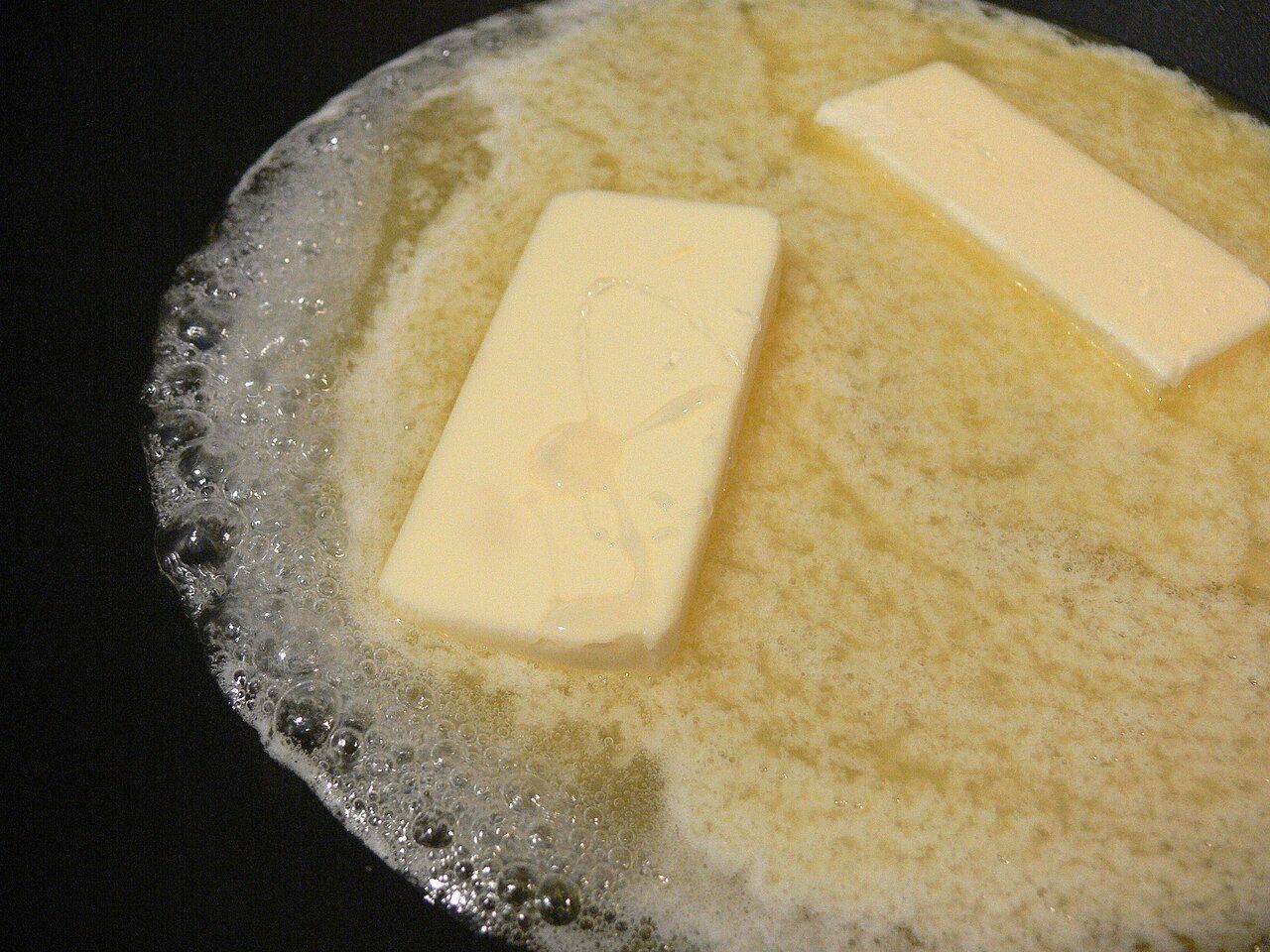
Butter Temperature Chart: The Three States
Baking references agree on three working zones, and the touch test confirms each one:
- Chilled, about 35°F: unyielding when pressed, cold to the touch. This is pie crust, biscuits, scones, and puff pastry territory.
- Softened, 65 to 67°F: bends without snapping and gives slightly when pressed – a finger leaves a shallow dent without sinking in. This is creaming territory: cakes, cupcakes, and most classic cookie doughs.
- Melted and cooled, 85 to 90°F: fluid and just slightly warm, after about five minutes of cooling off the heat. This is chewy cookies, brownies, and quick-bread territory.
The boundaries are narrower than they look. Butter starts melting around 82°F, so “softened” ends just a few degrees below “starting to melt” – and everything the recipe wants from softened butter collapses once those first translucent patches appear.
Softened Butter and the Creaming Method
Creaming – beating butter with sugar until pale and fluffy – is not just mixing, it is construction. The sugar crystals punch microscopic holes into the fat, filling the butter with millions of tiny air pockets. Those pockets are where leavening gases expand during baking; they are the lift in a butter cake and the fine crumb in a good cookie. Softened butter at 65°F is the only state that plays this role: firm enough to trap and hold the air, soft enough to be whipped full of it.
Miss the window and the recipe tells on you. Too cold – below about 60°F – and the butter will not cream; the mixture stays grainy, like natural peanut butter, and captures almost no air, so the finished cake is heavy and dense. Too warm – greasy, shiny, or streaked with melt – and the pockets you do create collapse under their own weight. The batter looks slick and soupy, and the bake comes out flat and dense in the other direction. If the recipe adds eggs after creaming, room-temperature eggs matter too: a cold egg dropped into properly creamed butter re-firms the fat and can make the batter look curdled.
Mixing speed belongs in the same conversation: moderate speed for two to three minutes, scraping the bowl halfway, does the job better than five minutes on high – and a stand mixer whipping hard against cold butter will warm it by friction alone, which is why a slightly cooler stick around 60°F works fine when a machine is doing the beating (our stand mixer guide covers which motors handle that load).
How to Soften Butter Fast – and What Not to Do
The reliable way is the slow way: take the butter out about an hour before baking. To cut that time down, slice it into tablespoon-size pieces and spread them on a plate – more surface area softens in fifteen to twenty minutes. A warm kitchen speeds it up further; a cold one slows it down.
The microwave is the famous shortcut and the famous failure. Even at defrost settings it heats unevenly: melted spots at the edges, a cold core in the middle, and no way to see the damage until the dough is already mixing. If you must use it, microwave five seconds at a time at low power, turning the stick after each burst – but the plate-of-slices method is faster than rescuing a spoiled stick. If the butter overshoots and goes greasy, refrigerate it briefly until it firms back to the bend-without-snap stage.
Cold Butter Builds Flaky Layers
Pie crust, biscuits, and scones want the opposite of everything above. In flaky dough, the butter should stay in visible, pea-sized to shard-sized pieces rather than blending in. Those cold pieces stay intact through mixing, then melt in the oven and release steam – butter is roughly 18 percent water – and the steam puffs the dough apart into distinct layers. If the butter blends fully into the flour first, there are no pockets left to steam, and the crust comes out cracker-dense instead of flaky.
Work fast, chill the dough whenever it starts to feel greasy, and err toward colder: butter that is slightly too cold merely cracks and needs a minute on the counter, while butter that is slightly too warm has already dissolved the layers you were building.
Melted Butter: Dense, Chewy, Spread
Melted butter skips the air-trapping game entirely, and that is exactly its job. With no incorporated air, batters made this way – brownies, blondies, quick breads, pancakes, and many chewy cookie recipes – come out soft, moist, and dense, with deeper butter flavor because the fat coats everything evenly. One discipline applies: cool the melted butter to 85 to 90°F before it meets the other ingredients. Pour it in hot and it cooks egg proteins on contact, greases the flour, and can scramble a batter.
In cookies, melted butter changes shape as much as texture. Baked straight away, the dough spreads fast in the oven for thin, crisp-edged cookies; chilled after scooping, the same dough bakes thick, soft, and chewy with crisp edges only. That spread difference is chemistry, not luck: butter melts around 82°F, twenty degrees lower than shortening at about 117°F, so butter cookies run and flatten while shortening cookies hold their shape. Some of that spread is also flour measurement – a dough that is accidentally heavy on flour resists spreading no matter what the fat does, which is why weighing flour properly (see our how to measure flour guide) is step zero for texture control.
Your Kitchen Changes the Targets
Butter temperature is relative to the room. In a hot kitchen – above about 73°F – softened butter slides past 70°F in minutes, so work from a slightly cooler stick, chill your bowl and ingredients, and hurry. In a cold winter kitchen, butter takes longer to soften and creaming fights friction losses; a few extra minutes on the counter fixes it. This is also why butter behaves differently across a long baking session: the second batch of cookies goes onto a warmer sheet with warmer dough, and spreads more than the first. Chill the dough between batches, and store what you are not using right away – butter picks up fridge odors, which is one more reason the pantry storage for bakers routine covers it.
The Bottom Line
Match the butter state to the job: cold and solid for flaky pastry, 65°F and pliable for creaming, melted and cooled for chewy and dense. When a recipe says “room temperature,” it means about 65°F – and your finger, pressed lightly into the stick, should leave a shallow dent without sinking through. Get that right and most butter-texture mysteries solve themselves, especially in classic holiday batches like the ones in our Christmas cookie recipes, where softened butter and chilled dough are doing the shaping work together.
Leave a Reply