
Parchment paper vs silicone baking mat is the kitchen-equipment debate that refuses to die, mostly because people treat the two as interchangeable. They are not. Parchment is a disposable, silicone-coated paper that you can cut, fold, and pipe from; a silicone mat is a reusable sheet of silicone reinforced with fiberglass mesh that sits flat in a half-sheet pan. Both prevent sticking, but they conduct heat differently, and that difference changes how cookies spread, brown, and set. If you have ever baked the same dough on both surfaces and wondered why one batch came out thinner and darker, this is why. Here is what each one is actually good at, and which one belongs in your kitchen first.
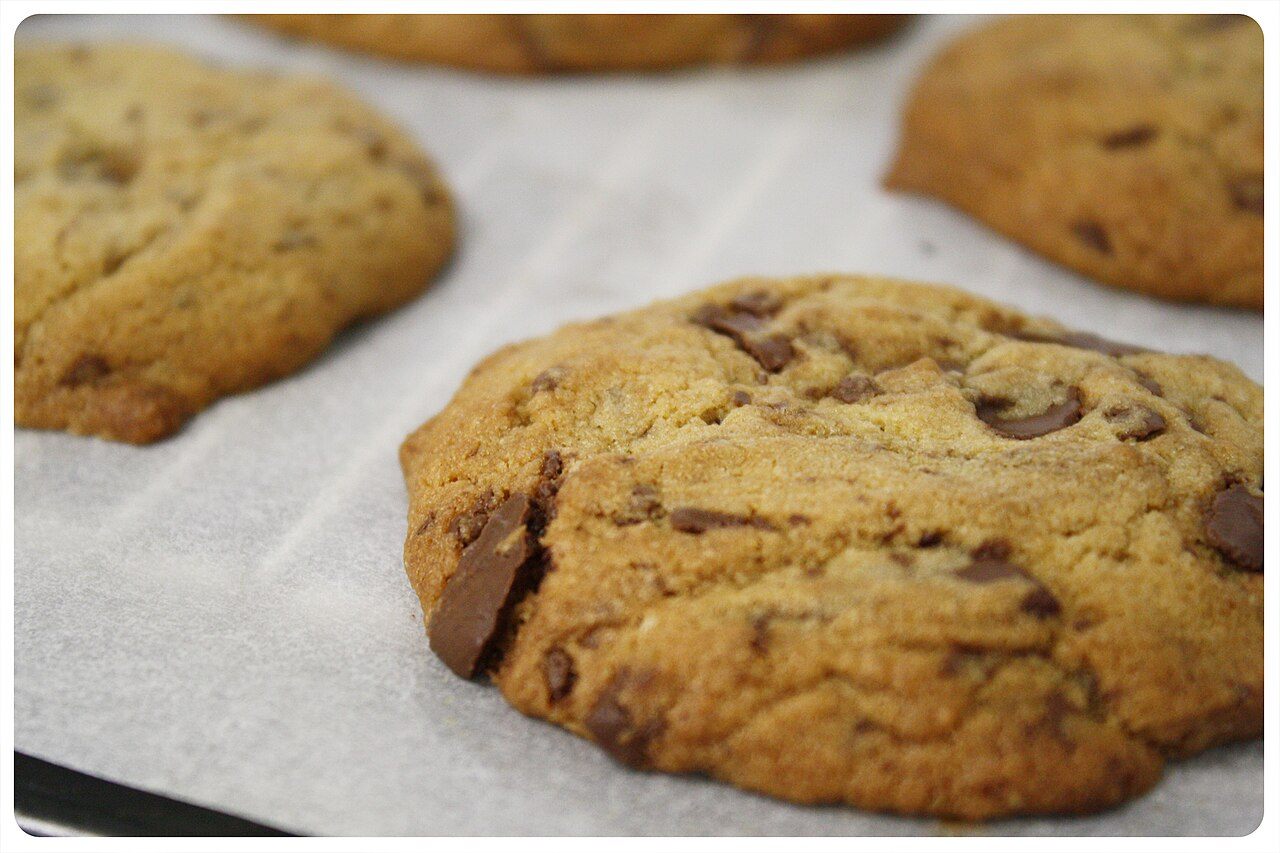
Parchment Paper vs Silicone Baking Mat: The Short Answer
Use parchment for cookies, cakes, loaves, roasting, and anything you need to cut to size or shape into a piping cone. It is cheap, disposable, and rated for roughly 425 to 450°F depending on the brand – never under the broiler. Use a silicone mat for sticky, high-sugar jobs like caramels and macarons, for repeated sheet-pan batches, and when you want a surface that stays put: America’s Test Kitchen measured mats at 60 to 117 grams against just 4 grams for a parchment sheet, so the mat does not curl or slide while you portion dough.
The tradeoff is that mats change the bake. A silicone surface is more slippery and less conductive than paper, so cookie dough spreads faster and further, browns more on the bottom, and can sweat as it cools. Pastry chef Stella Parks made the case against silicone for cookies famous for exactly this reason. In an America’s Test Kitchen macaron test, though, silicone produced more consistent feet and fewer cracked shells across three ovens – proof that the right surface depends on the recipe.
Reusability and Cost
A quality silicone mat is rated for roughly 2,000 to 3,000 uses, which spreads its higher purchase price across years of baking. Parchment is a consumable: a sheet is typically used once, or wiped and reused a few times if it is not too greasy (ATK notes that reusing parchment is fine). Per use, parchment costs a few cents and a mat costs a fraction of a cent – but the mat has to be washed by hand after every batch, about two to three minutes of sink time. If you bake once a month, parchment is the whole answer. If you bake two sheets every weekend, a mat pays for itself in a season.
Heat Limits and Safety
Parchment paper is normally rated to about 425 to 450°F. Push past that and the edges brown, scorch, or ignite – so keep it away from the broiler and never line a pizza stone with it at a 500°F bake. Silicone mats vary by brand: many are rated to 425°F, and some fiberglass-reinforced mats go to 500°F, but check the packaging rather than assuming. Neither product belongs on a stovetop burner or over an open flame. Silicone can also pick up stubborn grease and odors over time; hot soapy water and air drying are the standard cleanup, with no abrasive scrubbers.
Size, Fit, and Storage
Parchment wins on flexibility. Cut it to a round cake tin, fold it into a piping bag, tear off a square for candy, or crumple it to line an odd pan. A silicone mat only fits flat, full-size sheet pans – the common half-sheet size is about 16 by 11 inches – and it must be stored rolled or flat, which is awkward in a small kitchen. If your baking is mostly one small batch in a toaster oven or an 8-inch pan, parchment is simply more useful.
The Cookie Question, Specifically
For drop cookies, parchment is the default for good reason: it limits spread, keeps bottoms light, and gives a tender, even crumb – the same texture control you are already managing through butter temperature and how to measure flour. If your cookies consistently flatten into thin crispy discs, switch surfaces before you change the recipe. But if you are making macarons or a sticky caramel that bonds to paper, the mat’s release is worth the different browning. And if your cookies are spreading because the butter was too warm, no liner will fix that – start with the fat, then the surface.
For the big holiday baking sessions where sheets rotate through the oven all afternoon, the practical answer is to own both: parchment for the standard dough, a mat for the sticky batches and anything you want to slide off cleanly. The Christmas cookie recipes guide is built around that kind of mixed workflow, and a reliable stand mixer keeps the dough consistent from tray to tray.
When Neither liner Is Needed
A well-seasoned cast-iron skillet or a quality nonstick pan needs no liner at all for cornbread, pancakes, and stovetop bakes – and preheating an empty lined sheet is a mistake with both products. For brownies and bars you plan to cut into neat squares, greasing the pan and lining it with a parchment sling (two crossed strips leaving an overhang) gives you clean edges and an easy lift, something a flat silicone mat cannot do in a square tin. And for high-heat roasting of vegetables, many cooks skip both liners entirely: a lightly oiled rimmed sheet pan gives better caramelization than a mat’s softer, insulated contact. The decision is less about which product is “better” and more about whether your recipe needs release, shape, heat transfer, or all three. Match the tool to the job and the liner stops being a debate.
The Bottom Line
Buy parchment first: a few dollars, 425 to 450°F, cut to any shape, and the best results for ordinary cookies and cakes. Add a silicone mat when you bake often enough to value reusability, need reliable release for sticky or delicate work, or want a surface that will not skid across the pan. They are tools with different jobs, not rivals – and your cookies will tell you which one the recipe wanted.
Leave a Reply