

Pie crust and blind baking go together for one reason: fruit fillings give a crust hours to brown, but custard, cream, and quiche fillings do not. Pour a stovetop chocolate filling into a raw shell and you get a pale, soggy base; bake a quiche long enough to crisp an unbaked crust and the eggs turn dry and curdled. Blind baking — prebaking the empty shell before the filling goes in — solves both problems. The technique is simple, but the details that decide whether your pie crust stays crisp and full-sized are the ones most recipes skip. Here is the method, the two temperature schools, and the fixes for shrinking, slumping, and bubbling.
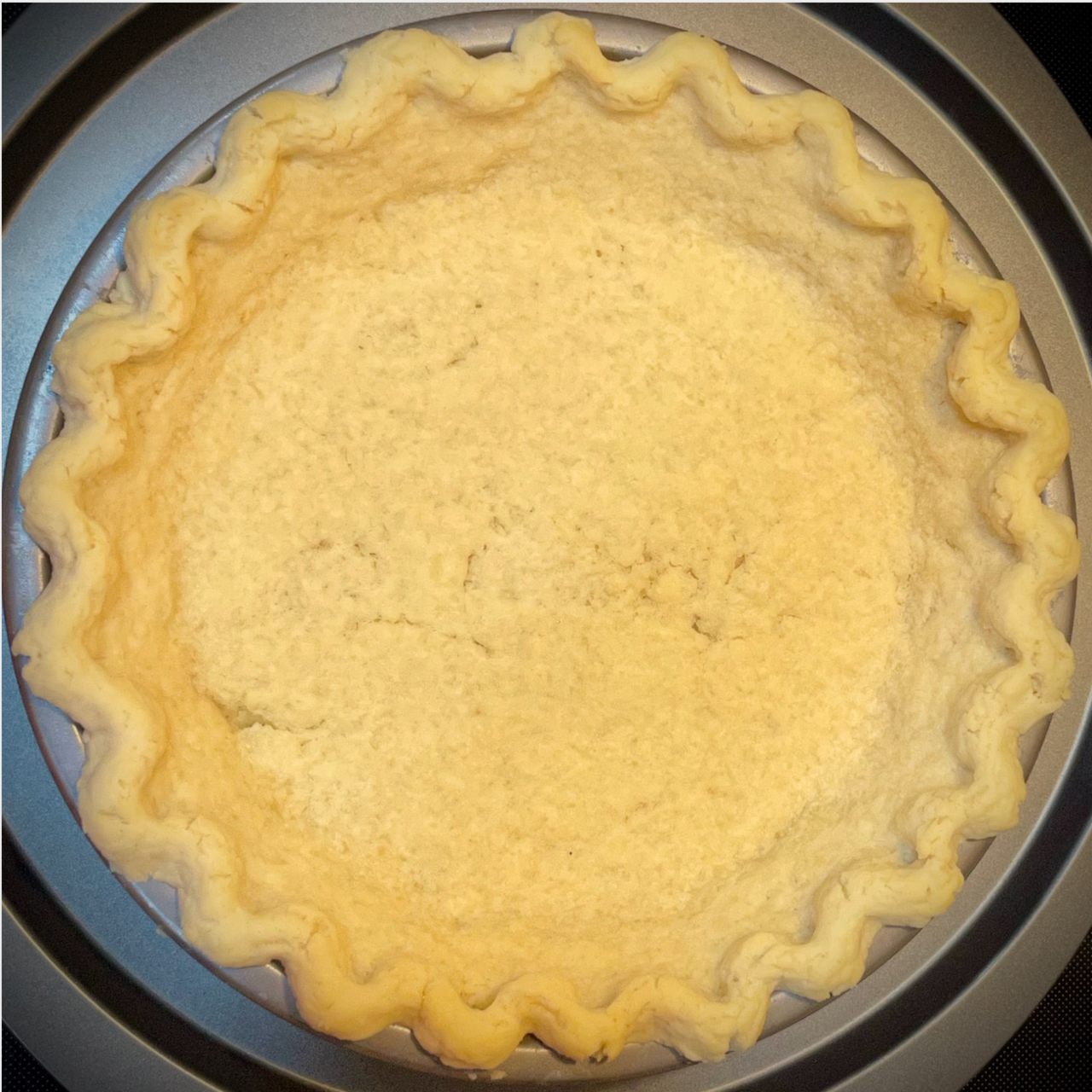
Pie Crust and Blind Baking: When You Need It
Blind bake **fully** when the filling never sees the oven: chocolate or banana cream pie, lemon curd, pastry cream, fresh fruit tarts, and chilled cream pies. The shell must be golden and crisp because it will not get another minute of heat. Blind bake **partially** when the filling bakes briefly at a gentle temperature — custard pie, pumpkin, and quiche. A head start keeps the bottom crisp without overbaking the filling. Skip it entirely for fruit pies such as apple or blueberry: they bake long enough at high heat (often 400°F for close to an hour) that the crust crisps alongside the filling. If you are still unsure about the fat that makes the crust flaky in the first place, our butter temperature guide explains why cold butter matters here more than anywhere.
Step 1: Make and Chill the Dough
Roll the dough to about 1/8 inch thick, roughly 2 inches wider than the pan. Lift the edges and let the dough settle into the corners — **do not stretch it**, because stretched dough contracts in the oven and takes your crimped rim with it. Trim the overhang to 1/2 to 1 inch, fold it under, and crimp; a thicker folded rim gives the sides support. Prick the bottom and sides lightly with a fork if you plan to use the high-heat method — this is called docking, and it lets steam escape.
Now chill: at least 30 minutes in the freezer, or an hour in the refrigerator, until the shell is firm to the touch. Some pastry chefs push this to two hours. Chilling relaxes the gluten and firms the fat so the outside sets in the oven before the butter melts and runs. This is the single step most often blamed when a crust shrinks. Weighing your flour (see how to measure flour) also helps: a dough with too much flour is crumbly, and one with too little slumps.
Step 2: Line and Weight It
Line the cold shell with parchment or heavy-duty foil, pressing it into the corners and up the sides — foil molds to the curve better, while parchment is simpler to lift out (our parchment vs silicone guide covers the difference; use paper here, not a mat). Fill it **to the top** with weights, pressing them gently against the sides: ceramic or metal pie weights, dried beans, uncooked rice, or granulated sugar. Sugar is the quiet favorite — the small granules distribute pressure evenly against the sides, and it comes out lightly caramelized and reusable for baking. Under-filling is the most common cause of collapsed sides, so add more than you think you need.
Step 3: Choose Your Temperature Method
There are two legitimate schools, and both work:
- Two-stage, high heat (the common method): bake at 375 to 400°F for 15 to 20 minutes with the weights in, until the edges are set and pale gold. Lift out the liner and weights, then bake another 5 to 8 minutes for a partial bake, or 10 to 15 minutes more for a fully golden shell. Pricking or docking the bottom before baking helps prevent bubbles once the weights come out.
- Low and slow (the pastry-chef method): bake the frozen, weighted shell at 350°F for 45 to 75 minutes, leaving the weights in the whole time. No docking, no lifting midway. chefs including Stella Parks, Nancy Silverton, and Wolfgang Puck favor this approach because moderate heat reduces shrinkage and puffing — the result is a flatter, more evenly golden crust. It takes longer, but almost no attention.
Store-bought frozen shells are a different animal: they hold less dough and brown much faster, so follow the package — usually 375 to 450°F for 10 to 12 minutes. Whichever method you choose, set the pie pan on a baking sheet (preheated if you can) so the bottom browns and the pan is easy to move. If the rim browns too fast, cover it with a foil ring or pie shield.
Fixing the Usual Failures
- Shrunken sides: the dough was stretched, overworked, or not chilled long enough. Next time, ease it in without pulling and chill until truly firm.
- Slumping into the pan: the weights did not reach the rim, or the dough was too warm and too high in fat. Pack the weights against the sides. A dough near 1¼ cups flour per 4 ounces of butter holds its shape better than 1 cup to 4 ounces.
- Puffed bottom: while the crust is still hot, press it down gently with the back of a spoon. Docking or the low-and-slow method prevents it next time.
- Cracks: patch with a bit of raw dough, or brush with beaten egg and bake a few minutes more — egg also seals a shell that will hold a very wet filling.
- Soggy bottom after filling: the shell needed a longer blind bake, or the filling sat in it while both waited. Fill and bake as soon as both are ready.
One last rescue for a stubborn crust that keeps sliding: bake it upside down between two identical flat-rimmed metal pans, lined and weighted as usual. Gravity pulls the dough toward the rim instead of into the middle — then flip it right side up for the final golden minutes.
The Bottom Line
Fully blind bake for no-bake fillings; partially blind bake for quiche and custard; skip it for long-baked fruit pies. Chill the shaped crust firm, line it, fill the weights to the rim, and bake either 15 to 20 minutes at 375 to 400°F followed by a short unweighted finish, or 45 to 75 quiet minutes at 350°F. Do those four things and the era of pale, shrunken pie shells ends with your next bake — including the holiday batches in our Christmas cookie recipes guide, where a crisp tart shell is a welcome change of pace.
Leave a Reply