
A sourdough starter for beginners is simpler than it looks: flour, water, time, and a willingness to ignore the calendar. You are not adding yeast from a packet — you are cultivating the wild yeasts and lactic acid bacteria that already live on whole grain flour and in the air around your kitchen. The process takes five to fourteen days depending on temperature, and the only reliable sign of readiness is behavior, not a date. Here is a clean, low-waste method based on university extension and baking-school guidance, plus the troubleshooting that gets most first-timers through the confusing middle week.
Sourdough Starter for Beginners: The First Day
Start small. A 50-to-113-gram starter is plenty for a first attempt and wastes far less flour than the multi-cup jars older recipes call for. Mix equal weights of whole wheat or rye flour and water — King Arthur’s updated 2026 method uses 50 grams of whole wheat and 50 grams of cool water — until no dry flour remains. Use a glass, crockery, stainless steel, or food-grade plastic container of at least one quart: the culture will grow. Cover it loosely so air can move; a tight seal is not necessary and can trap condensation.
Keep it warm. Extension guidance from Clemson and UC uses about 70°F as the floor, with 75 to 80°F producing faster results. Below 68°F, activity slows dramatically. A turned-off oven with the light on, the top of a refrigerator, or a spot above the water heater all work. Set the jar on a towel so a cold counter does not steal heat. Stir thoroughly — any dry flour pockets are food the culture cannot reach efficiently.
Days Two to Five: Feed, Discard, Repeat
For the first day or two you may see nothing at all. That is normal. From around day two, many methods begin discarding half and refeeding with equal weights of flour and water — the classic **1:1:1 ratio** of starter, flour, and water by weight. Discarding is not waste for its own sake: it keeps the jar manageable and gives the remaining microbes more food per cell, which speeds up the rise. Your discarded starter is perfectly usable in pancakes, biscuits, waffles, tortillas, scones, or crackers.
By day three you will likely notice bubbles, a fruity or yeasty smell, and some expansion. That is the cue to feed twice a day, roughly twelve hours apart. Weigh the starter rather than scooping it — a cup of bubbly starter weighs different amounts depending on how much air it holds, and a cheap digital scale removes the guesswork (our how to measure flour guide explains the same principle for dry flour). Through days four and five, keep the two-a-day rhythm and watch the jar, not the clock.
How to Know It Is Ready
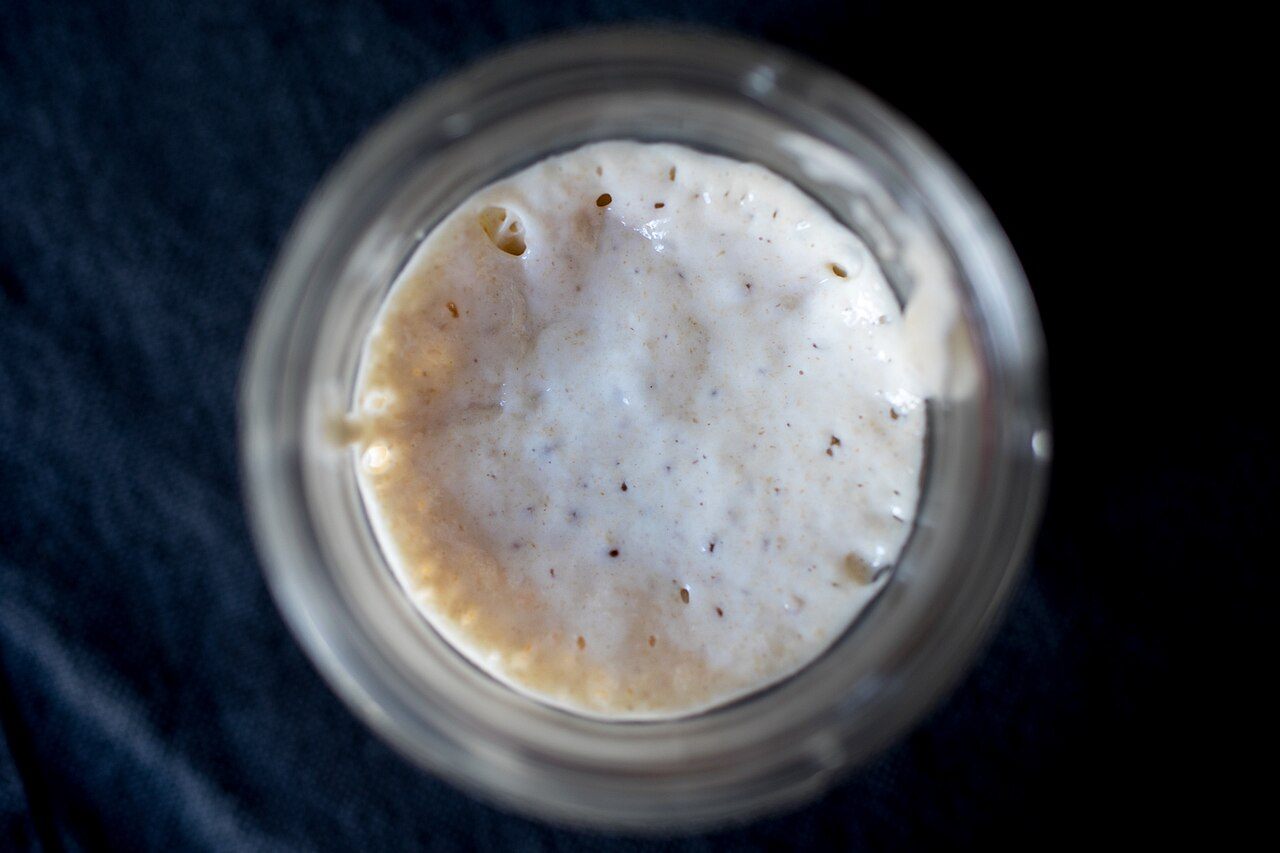
A ready starter reliably does three things after a feeding: it **doubles in volume within four to eight hours**, it is full of bubbles throughout rather than just on top, and it smells pleasantly tangy or yeasty — like yogurt or bread, not rotten. The classic float test is a useful confirmation: drop a spoonful into a bowl of room-temperature water; if it floats, the culture has enough gas to leaven a loaf. If it sinks, feed it again and wait an hour or two.
Some starters hit that mark on day five. Others need a couple of weeks, especially in a cool kitchen. Keep feeding every twelve hours until the rise is consistent two or three times in a row. Rushing a sluggish starter into dough is the most common beginner mistake: unlike commercial yeast in our baking powder vs baking soda guide, wild yeast needs a strong population before it can lift a heavy loaf.
The Weird Phase: What Is Normal in Week One
- Bubbles on day two, then silence: a normal false start. The first wave of microbes dies back as the environment changes; keep feeding.
- A sharp acetone or nail-polish smell: the culture is hungry between feedings. Move to twice-a-day feedings or use a slightly larger flour-to-starter ratio.
- A clear, brownish, or gray liquid on top (hooch): a sign of a very hungry culture. Pour it off or stir it in, then feed more promptly.
- Pink or orange streaks, fuzzy mold, or a rotten smell: not normal. Discard and start over in a thoroughly cleaned jar.
Switch to a clean jar every few days while the starter is young. A thin smear on the sides of a dirty jar can harbor mold even when the culture itself looks healthy.
Feeding Ratios and Long-Term Care
The 1:1:1 ratio is a beginning, not a rule. If your starter peaks and falls in under six hours, it is hungry — increase the flour and water relative to the starter, to 1:2:2 or 1:3:3. If it barely moves after twelve hours, reduce the ratio or move it somewhere warmer. More food means a longer, slower rise; less food means a faster peak. Once the culture is mature, keep it at room temperature and feed daily, or store it in the refrigerator and feed weekly. For baking, feed it a day ahead and use it when it has doubled and is actively bubbling.
Use filtered or bottled water if your tap water is heavily chlorinated, and weigh your flour consistently. A slightly whole-grain flour — whole wheat or rye — gives the culture more nutrients and enzymes than plain all-purpose, which is why the best beginnings usually include some of it. Keep parchment handy for the bake day: a parchment-lined sheet or Dutch oven setup makes the finished loaf easier to handle, as our parchment vs silicone guide explains.
What to Do With All That Discard
Discard is simply unfed starter with a tangy flavor, and it works in any recipe that already calls for buttermilk or a acidic liquid. Stir it into pancake batter, drop biscuits, waffles, or a quick coffee cake — the acid gives the same tender crumb that our buttermilk substitute guide describes. Keeping a small jar of discard in the fridge gives you a backup culture too: if you accidentally neglect your main jar, a spoonful of discard can restart it.
The Bottom Line
Mix equal weights of whole-grain flour and water, keep it around 70 to 80°F, discard and refeed at a 1:1:1 ratio, and move to twice-daily feedings once bubbles appear. Bake only when the starter doubles predictably inside four to eight hours and passes the float test. Ignore the day count, trust the behavior, and you will have a culture that can outlive many store-bought yeast packets.
Leave a Reply