

Room temperature eggs are one of those recipe instructions that sounds fussy until you see what they change. King Arthur Baking defines room temperature as 68°F to 70°F (20°C to 21°C) — a far cry from a refrigerator’s 40°F (4°C). At that temperature, egg whites whip faster and to a greater volume, and eggs blend into butter and batter without seizing it. The rule matters most in sponges, meringues, and creamed cakes. It matters least in a cookie or brownie where the egg is just moisture and structure. Here is what the instruction actually means, how to warm eggs safely in minutes, and the few cases where you should keep them cold.
Room Temperature Eggs: What the Term Actually Means
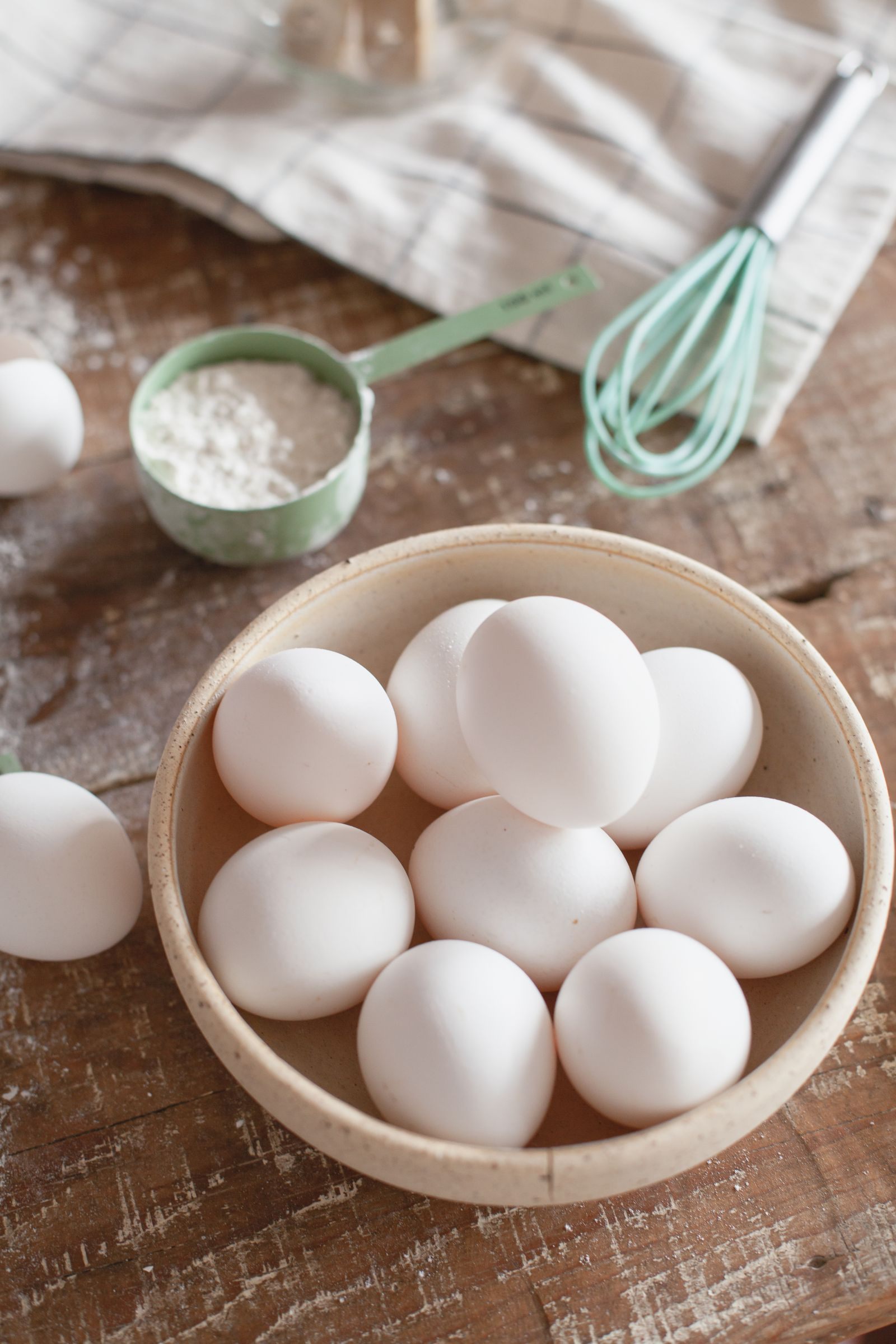
When a recipe says room temperature eggs, it means eggs that have been sitting in a normal kitchen — roughly 68°F to 70°F — long enough to lose their chill all the way through. A cold shell tells you nothing about the center of the egg: a large egg left out for ten minutes is still close to refrigerator temperature inside. It takes about 30 to 60 minutes on the counter for a shell egg to come to true room temperature, depending on the room. This is about the egg’s physical behavior, not about letting it sit out for hours — the safety limit is covered below.
Why Recipes Ask for Room Temperature Eggs
There are three reasons, and only two of them apply to most baking.
- Whipping volume: egg whites at about 60°F to 72°F whip faster and trap more air than cold whites. That is why meringue and foam cakes are the recipes most likely to insist on it. Our meringue problems and fixes guide covers the other variables that decide whether whites reach stiff peaks.
- Emulsification: a cold egg dropped into creamed butter or a warm batter can make the mixture look curdled, and it takes longer to blend smoothly. Room temperature eggs incorporate without that shock. If you are creaming butter for a cake, the butter temperature guide explains the matching 65°F to 68°F target.
- Even baking: a very cold batter starts baking more slowly in the center while the edges set, which can produce a domed or uneven crumb in a large sponge. Room temperature ingredients shorten that lag.
In a drop cookie, a brownie, or a quick bread, the egg is mainly liquid and protein. The difference between cold and room temperature is real but small, and mixing method matters more. Cookbooks differ on how strongly to state the rule: King Arthur says follow it when a well-developed recipe calls for it, and not to worry when it does not.
The Quick-Warm Method (and What Not to Do)
You do not have to plan an hour ahead. Put the eggs — still in their shells — in a bowl of warm tap water, roughly 100°F to 110°F (38°C to 43°C), for five to ten minutes. The water should feel comfortably warm to the hand, not hot. Change the water once if it cools. Dry the shells before cracking. For whites you intend to whip, separate the eggs while they are still cold — cold yolks hold together better and whites separate more cleanly — then let the covered whites sit at room temperature for 20 to 30 minutes before beating.
Do not microwave eggs in the shell. The yolk can superheat and erupt, and even a short burst creates hot spots that partly cook the white. Do not warm eggs in a hot oven or in direct sun either; both drive the temperature past the point where proteins behave predictably. If you need whole eggs in a hurry, warm water is the only method worth using. If you are also softening butter, set the butter out at the same time rather than melting it — the brown butter guide explains why melted butter changes texture even when the fat is the same.
When Cold Eggs Are Better
Separating yolks is easier cold, as noted. Cold whites also whip more slowly but produce a slightly more stable foam, which some pastry chefs prefer for a meringue that must hold through a long piping session. For a genoise or a soufflé where maximum volume is the goal, room temperature wins; for a meringue that must sit on a tart for an hour, slightly cool whites are defensible. Cold eggs are also fine in batters that are mixed by machine for a long time — the friction warms them anyway. In short, the rule is strongest for delicate foams and creamed batters, weakest for everything else.
Food Safety: The Two-Hour Rule
This is the part that outweighs texture. USDA and FDA guidance is to keep shell eggs refrigerated at 40°F (4°C) or below and not to leave them out for more than two hours. On a hot day, when the ambient temperature is above 90°F (32°C), the limit drops to one hour. Warmth lets any Salmonella present on or in the egg multiply, and condensation on a cold shell moving into a warm room can carry bacteria inward. So warm only the eggs you will use, warm them in water rather than on the counter, and put unused eggs straight back. Do not warm a whole carton for a recipe that needs two. Cooked egg dishes follow the same two-hour limit — one hour above 90°F — and should be refrigerated promptly in shallow containers. If you have left a bowl of whites out while you measured everything else, check the clock before you use it.
Egg Size, Weight and Substitution
Recipes assume large eggs unless stated otherwise. A large egg weighs about 50 grams out of the shell: roughly 30 grams of white and 20 grams of yolk. When a recipe needs precision — a sponge, a custard, a meringue — weighing is more reliable than counting, especially if your eggs are medium or jumbo. One large egg is about 3½ tablespoons of beaten liquid, roughly ¼ cup. Two large egg whites are about ¼ cup, and two yolks about 2 tablespoons plus a teaspoon. If a batter looks too thick after adding eggs, resist the urge to add extra liquid; compare your flour measurement first, since a packed cup can hold 20 percent more flour than a spooned one. The measuring flour guide shows the difference. For a layer cake, an egg that whips well means a taller crumb and a different bake time, so check the pan size conversions before you adjust the oven.
The Bottom Line
Room temperature eggs means 68°F to 70°F, not merely “not frozen.” Use them where whites must whip or eggs must blend into butter — meringues, sponges, creamed cakes — and ignore the rule in cookies and brownies. Warm shells in 100°F to 110°F water for five to ten minutes, separate cold eggs first if you need clean whites, never microwave in the shell, and keep the two-hour food safety limit in view. It is a small detail that shows up most clearly in the finished crumb.
Leave a Reply