

Meringue problems almost always trace back to one of three moments: the whites were not perfectly clean, the sugar went in at the wrong time, or the oven treatment was wrong for the style you made. Weeping, cracking, grittiness, beading, and a soft center all look like different failures, but they share the same root — a foam of air in a protein-and-sugar matrix that either did not build properly or did not set properly. Understanding that structure is the fastest way to fix it. Whipped egg whites can expand six to eight times in volume; holding that volume is chemistry, not luck. The same attention to ratios applies to the flour in pavlova and meringue cakes — see our how to measure flour guide. Here is what goes wrong and the exact correction for each problem.
Meringue Problems Start With the Foam
Whisking egg whites does two things at once: it beats in air bubbles, and it unfolds (denatures) the proteins, exposing water-repelling parts that migrate to the bubble surfaces and link into a protective net. Sugar then dissolves into the water phase, thickening it and slowing the drainage that would otherwise collapse the foam. Acid — cream of tartar, lemon juice, or vinegar — helps control how tightly those protein nets bind, which is why a trace of acid improves almost every meringue.
Fat is the enemy. Even a speck of yolk, well under one percent, gives lipids a place to compete with proteins at the bubble surface, so the whites whip more slowly and to less volume. Butter, oil, and a greasy bowl do the same. Separate eggs carefully, use a spotlessly clean and degreased bowl, and wipe the whisk too. If you are using a machine, the stand mixer does the work evenly, but it also over-whips faster than a hand — watch it closely.
The Three Methods and Why Stability Differs
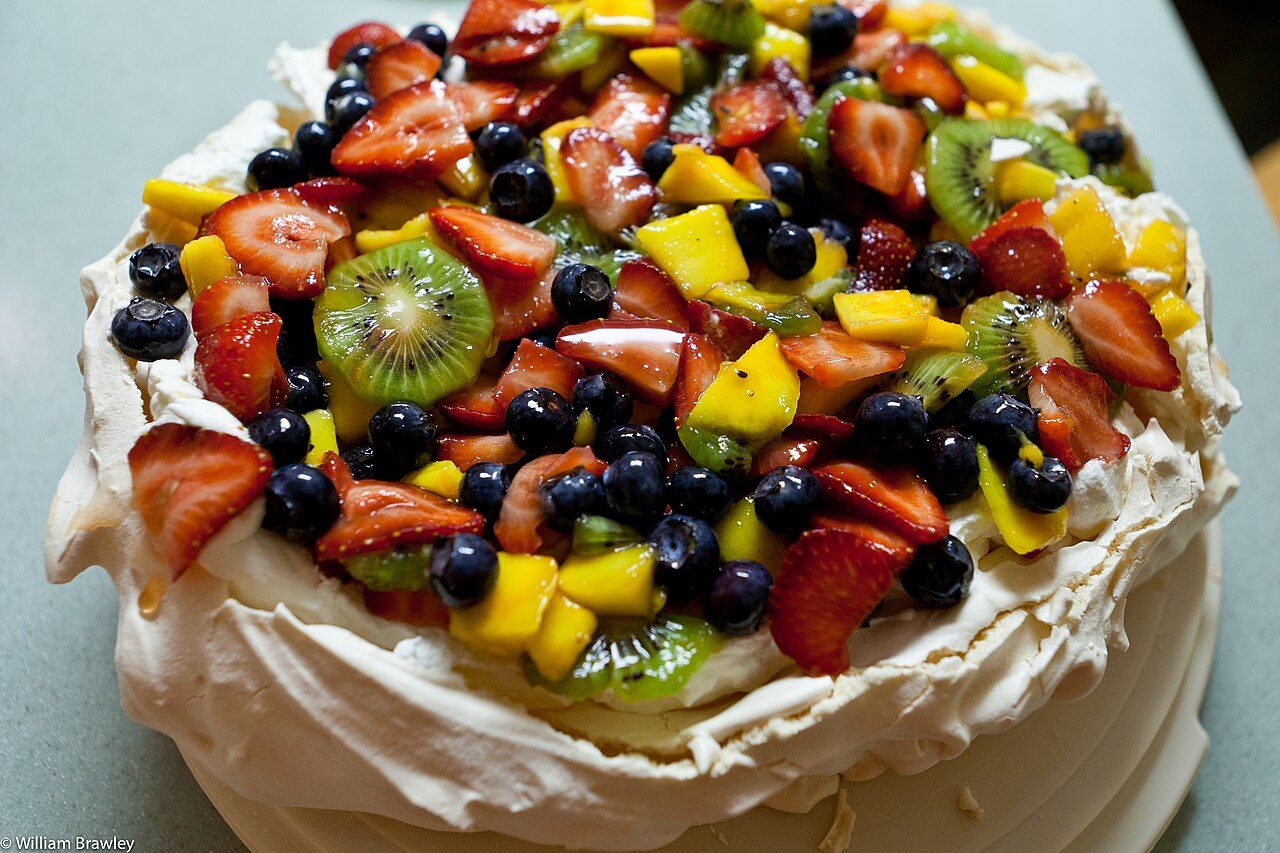
- French: raw whites whipped with sugar. Simplest and least stable — bake promptly. This is the classic crisp meringue cookie and pavlova method.
- Swiss: whites and sugar warmed over a bain-marie until the sugar dissolves (about 120°F), then whipped. Dense and smooth, with middle stability.
- Italian: hot syrup at 244 to 250°F streamed into whipping whites. Cooked, glossy, and the most stable — the one least likely to weep.
French meringue is the one that generates most troubleshooting questions because it contains the most free moisture. If weeping has ruined your lemon meringue pie before, switching to Swiss or Italian is the structural fix.
Problem 1: Weeping (Liquid Under the Meringue)
Weeping is liquid seeping out and pooling around the base. It means the meringue was undercooked, over-whisked, or unstable. Over-beating tightens the protein bonds so much that they squeeze moisture out during baking; under-baking leaves too much water inside to begin with. French meringue on a short-baked pie is the classic case.
Fixes: whip slower and longer for many small, even bubbles instead of a few large ones; stop beating the moment the sugar dissolves and peaks are glossy; bake at a slightly lower temperature for longer until a finished meringue lifts cleanly from the tray; or move to Swiss or Italian. A teaspoon of cornstarch per egg white folded in at the end absorbs stray moisture, though too much leaves a chalky taste. There is no rescue once a baked meringue has wept — prevent it next time.
Problem 2: Gritty or Beaded Surface
When sugar has not fully dissolved, granules melt in the oven and seep out as sticky, sometimes golden droplets — beading. You can test for this before baking: rub a little meringue between your thumb and forefinger. If it feels gritty, keep whisking a minute and test again.
Fixes: use fine caster (superfine) sugar, which dissolves faster than granulated; add the sugar gradually — one large spoonful roughly every 60 to 90 seconds — starting only after soft peaks have formed; and reduce the oven temperature if the surface is browning and beading at the same time. King Arthur’s controlled tests also found that cream of tartar at 1/8 teaspoon per large white produces a glossier, stiffer meringue that holds its shape and stays crisp longer than lemon juice or vinegar.
Problem 3: Soft, Crazing, or Cracking Meringues
Cracks come from large air bubbles expanding too fast, usually because the mixer was on high or the oven was too hot. A pitted, soft surface — crazing — points the other way: too little sugar, too short a bake, or humidity after baking. Meringue is highly hygroscopic and pulls moisture from humid air.
Fixes: whip on medium or medium-high speed for a fine, even foam; drop the oven temperature by even 10°C if cracks persist; bake longer at low heat; then cool in the turned-off oven with the door closed or slightly ajar. Once cool, move meringues straight into an airtight container. Do not open the oven door early — the sudden temperature change collapses unset meringues and causes cracks.
Problem 4: Flat, Foamy, or Splitting Before Baking
A thin, foamy mixture that will not hold shape means the whites were whipped on too high a speed, the sugar was added too late or too fast, or there was not enough sugar. A ration around 55 to 75 grams of sugar per large egg white gives a dense, smooth, pipeable foam. A mixture that separates while sitting usually means old eggs or a low sugar ratio — fresh whites are naturally more acidic and stable. Add acid (about 1 teaspoon lemon juice or vinegar, or ½ teaspoon cream of tartar, per four whites) and bake as soon as the meringue is mixed.
If you have over-whipped until the mixture looks dry or starts to split, whisk in one fresh egg white briefly to loosen it. If you have under-whipped, keep going on medium speed — you cannot fix it in the oven.
The Bottom Line
Clean, fat-free bowl and perfectly separated whites; sugar added gradually at soft peaks until it fully dissolves; a trace of acid; medium speed; and a low, slow bake with a hands-off cool-down. With those five habits weeping, beading, cracking, and grittiness stop being mysteries. They are also the same habits behind the crisp shells in our pie crust and blind baking guide and the holiday bakes in our Christmas cookie recipes, where controlling moisture is the whole game.
Leave a Reply